

Welcome to the most comprehensive carding tutorial for beginners available online. If you have been searching for a clear, step-by-step guide on how to start carding from scratch, you have found the right resource.
This beginner carding guide is designed specifically for people who are completely new to carding. We will cover the carding basics for beginners, explain the terminology, walk through the entire carding process, and provide actionable tips to help you succeed.
Carding can seem overwhelming at first. There are many terms to learn, tools to set up, and methods to understand. But with the right guidance, anyone can learn carding from scratch. This carding tutorial step by step will take you from zero knowledge to a solid understanding of how carding works.
Let us begin your carding journey.
Table of Contents
We've done the vetting. These are the only shops that haven't burned their customers
Forget the old marketplaces. These are the next generation. Faster, safer, better product. This is where the smart money moves. Don't get left behind.
Buyccfullz.com
No waiting, no middlemen. This site moves money. Click and collect..
Dumpseller.com
Clean, verified routes. dumpseller.com keeps the cash flowing. No blocks. No holds.
CvvDump.com
Turn digits into dollars. cvvdump.com is the key to the kingdom. Your wallet stays full.
1. What is Carding? A Beginner-Friendly Explanation
Carding is the practice of using stolen credit card information to make purchases or obtain cash. For beginners, it is important to understand that carding involves several distinct phases: obtaining card data, setting up an anonymous environment, executing transactions, and cashing out the value.
At its most basic level, carding works like this: someone steals credit card numbers, someone else uses those numbers to buy things online, and the purchased items or funds are converted into cash.
But modern carding is more sophisticated than that simple description suggests. Security systems have evolved, and so have carding techniques. In 2026, successful carding requires knowledge of BINs, non-VBV sites, proxy setups, and reliable sources for card data.
This carding tutorial for beginners will explain all of these concepts in plain language that anyone can understand.
Also Read: Updated Non VBV BINs List
2. Carding Terminology Every Beginner Must Know
Before diving into the methods, you need to understand the language of carding. Here are the most important terms:
BIN – Bank Identification Number. The first six digits of a card number that identify the issuing bank.
Non-VBV – Cards that do not trigger Verified by Visa or Mastercard SecureCode authentication. These are highly valuable for carding.
Fullz – Complete cardholder information including name, address, SSN, DOB, and more.
Dumps – Magnetic stripe data from cards that can be encoded onto blank cards.
Socks5 – A type of proxy that provides better anonymity for carding operations.
Antidetect Browser – A browser that creates unique fingerprints to avoid detection.
Drop – An address where physical goods are received.
Cashout – The process of converting carded funds into usable money.
OTP – One-time password used for transaction verification.
Cardable Sites – Websites that accept stolen cards without strong verification.
3. Essential Carding Tools for Beginners
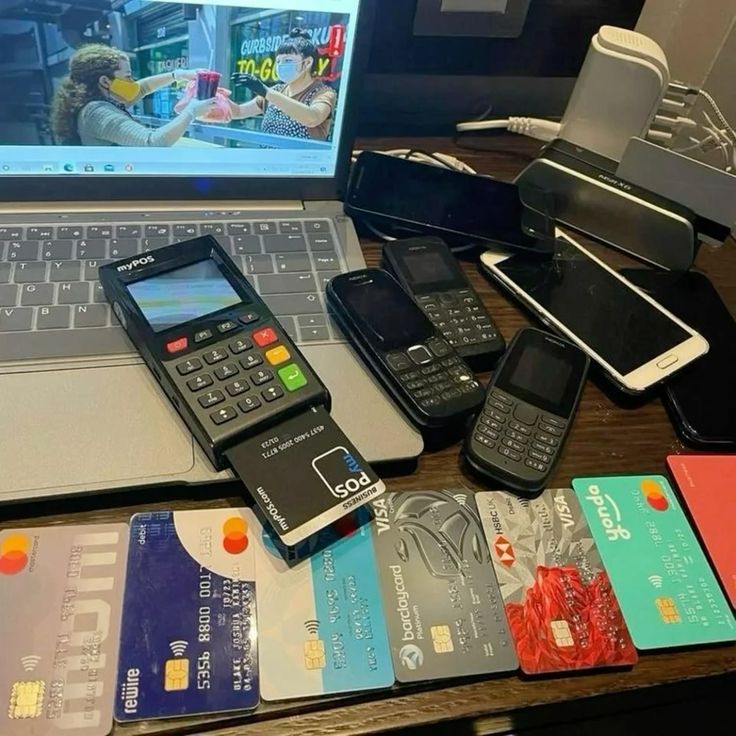
As a beginner, you do not need the most expensive or complex tools. Start with the basics and upgrade as you gain experience.
Antidetect Browser
This is non-negotiable for carding. An antidetect browser creates a fake browser fingerprint that hides your real identity. For beginners, Dolphin Anty offers a free version that is sufficient to start learning.
SOCKS5 Proxy
You need residential SOCKS5 proxies that match your target cardholder’s location. Many proxy providers offer packages specifically for carding. Start with a small package to test your setup.
VPN
A reliable VPN adds an extra layer of security. Choose one that does not keep logs. Free VPNs are not recommended for carding.
BIN Checker
You need a BIN checker to verify card details before attempting transactions. Some BIN checkers are free, while paid versions offer more features.
CC Shop Account
You need a source for card data. Verified CC shops like Cvvdump.com, Buyccfullz.com, and Dumpseller.com provide fresh cards suitable for beginners.
Drop Address
For physical goods, you need a drop address. Beginners can start with digital goods that do not require shipping.
Cashout Accounts
Set up accounts on PayPal, Cash App, Venmo, or other platforms for cashing out.
4. Carding Setup for Beginners: Step by Step
Setting up your carding environment correctly is the most important step. Here is how to do it:
Step 1: Install an Antidetect Browser
Download and install Dolphin Anty or another antidetect browser. Create a new profile with settings that match your target location.
Step 2: Configure Your Proxy
Obtain a SOCKS5 proxy that matches the cardholder’s country and city. Enter the proxy details into your antidetect browser profile.
Step 3: Verify Your Setup
Use websites like whatismyipaddress.com to confirm your IP address shows the correct location. Check that your browser fingerprint looks normal.
Step 4: Create Clean Accounts
Set up email accounts, shopping accounts, and payment accounts using fake information that matches your proxy location.
Step 5: Obtain Card Data
Visit a verified CC shop like Cvvdump.com to purchase your first card. Start with a low-value card to test your setup.
Step 6: Test Your First Transaction
Choose a non-VBV site and attempt a small purchase. If it succeeds, you have confirmed your setup works.
5. How to Start Carding: The Complete Process
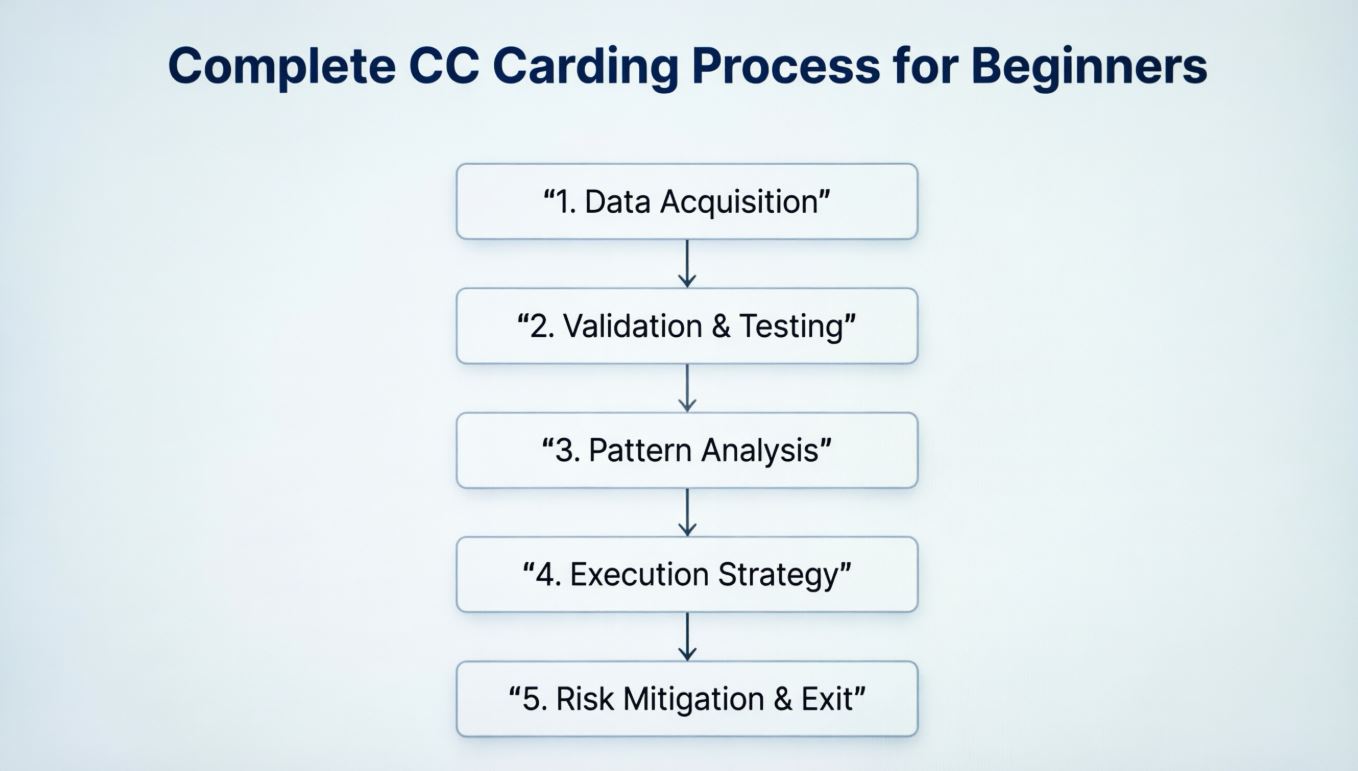
This carding tutorial step by step walks you through the complete process from beginning to end.
Phase 1: Preparation
Set up your antidetect browser, proxy, and accounts. Verify everything works before obtaining card data.
Phase 2: Card Acquisition
Purchase cards from verified CC shops. For beginners, Cvvdump.com, Buyccfullz.com, and Dumpseller.com are recommended sources.
Phase 3: BIN Checking
Use a BIN checker to verify each card. Confirm it is non-VBV and has sufficient balance.
Phase 4: Site Selection
Choose a non-VBV site that matches your card’s BIN. Digital goods sites are best for beginners.
Phase 5: Transaction Execution
Enter card details carefully. Use a shipping address that matches the billing address if possible. For digital goods, use your clean email.
Phase 6: Cashout
Convert your purchased goods or funds into cash. Methods include reselling, gift card conversion, or direct transfers.
Phase 7: Cleanup
After each transaction, clear your browser profile, change your proxy, and rotate your accounts.
Also Read: Ultimate Guide to CC Cashout
6. Carding Methods for Beginners
Not all carding methods are suitable for beginners. Here are the methods that work best when you are just starting:
Non-VBV Carding
This is the most beginner-friendly method. Non-VBV cards do not require additional verification, making transactions straightforward. Focus on finding non-VBV BINs and targeting non-VBV sites.
Gift Card Carding
Purchasing gift cards with stolen cards is simple and effective. Gift cards can be used or resold easily. This method requires minimal setup.
Digital Goods Carding
Buying digital products like software licenses, game keys, or subscription codes is ideal for beginners. No shipping address is needed.
Food Delivery Carding
Ordering food through delivery apps is another beginner-friendly method. The transaction amounts are usually small, reducing risk.
Small Ticket Item Carding
Purchase low-value physical items to test your drop address. Start with items under $50 to minimize potential losses.
7. Non-VBV Sites Explained for Beginners
Non-VBV sites are websites that do not require Verified by Visa or Mastercard SecureCode authentication. These sites are the primary targets for carding because they accept card payments without additional verification steps.
For beginners, understanding non-VBV sites is crucial. Here is what you need to know:
- Non-VBV sites accept cards without OTP or 3D Secure
- Non-VBV cards work best on non-VBV sites
- Some sites are non-VBV for specific BINs only
- Non-VBV lists change frequently as sites update their security
To find non-VBV sites, use a BIN checker to test which sites accept your cards. Many carders share non-VBV site lists in forums and Telegram channels.
For the most reliable non-VBV BINs, visit Cvvdump.com, Buyccfullz.com, and Dumpseller.com. These verified CC shops provide cards that work on non-VBV sites.
8. BIN Checker Basics for Beginners
A BIN checker is a tool that reveals information about a credit card based on its first six digits. For beginners, using a BIN checker is essential before attempting any transaction.
What a BIN checker tells you:
- Issuing bank name and country
- Card type (credit, debit, prepaid)
- Card level (classic, gold, platinum)
- Whether the card is non-VBV
- Whether the card is likely to work online
How to use a BIN checker:
- Enter the first six digits of the card number
- Review the results
- Confirm the card matches your target site requirements
- Look for non-VBV status
Using a BIN checker prevents wasted time on invalid cards. It also helps you identify high-value BINs for future use.
9. Carding Cashout Methods for Beginners
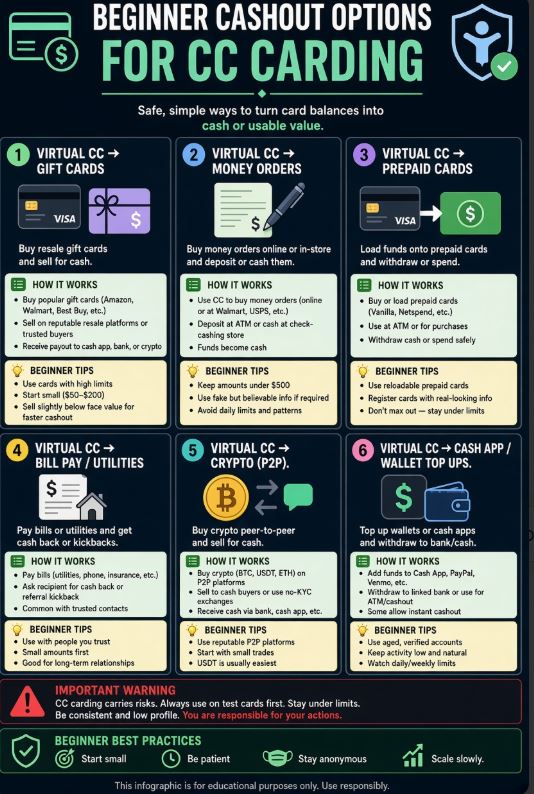
Cashout is how you convert carded items or funds into usable money. Here are beginner-friendly cashout methods:
Gift Card Reselling
Purchase gift cards with stolen cards and sell them at a discount on gift card exchange sites. This is one of the simplest cashout methods.
PayPal Transfers
If you can card a PayPal account, transfer funds to a clean account. Some carders use PayPal to purchase cryptocurrency.
Cash App and Venmo
These peer-to-peer payment platforms allow instant transfers. Link a stolen card to a clean account and transfer funds out.
Cryptocurrency
Convert card funds into Bitcoin or other cryptocurrencies. Some exchanges accept credit card deposits without OTP verification.
Direct Cashout Services
Some verified CC shops offer cashout services. Cvvdump.com, Buyccfullz.com, and Dumpseller.com provide instant transfers to Cash App, PayPal, Venmo, Zelle, and bank accounts.
Also Read: Buy Bitcoin With Debit Card No OTP in 2026
10. PayPal Carding for Beginners
PayPal carding involves using stolen card data with PayPal accounts. Here is a beginner-friendly approach:
Step 1: Create a Clean PayPal Account
Use fake information that matches your proxy location. Verify the account with a phone number.
Step 2: Link the Stolen Card
Add the card details to your PayPal account. Use a card with a matching billing address.
Step 3: Make a Purchase
Use PayPal to purchase digital goods or gift cards. This avoids shipping complications.
Step 4: Transfer Funds
If possible, transfer funds from the PayPal account to a clean account.
Step 5: Withdraw
Withdraw the funds to your bank account or use them to purchase cryptocurrency.
PayPal carding requires careful execution. Start with small amounts to test your method.
11. Amazon Carding for Beginners
Amazon is a popular target for beginner carders. Here is how to card Amazon:
Method 1: Gift Card Loading
Purchase Amazon gift cards with stolen cards. Load the gift card balance onto a clean Amazon account.
Method 2: Direct Purchase
Use a stolen card to purchase items directly on Amazon. Use a drop address for shipping.
Method 3: Gift Card Reselling
Purchase Amazon gift cards and sell them at a discount on gift card exchange platforms.
Amazon has strong fraud detection, so use non-VBV cards and proper OPSEC. Start with small purchases to test your setup.
12. Gift Card Carding for Beginners
Gift card carding is one of the easiest methods for beginners. Here is how it works:
Step 1: Purchase Gift Cards
Use stolen cards to buy gift cards from retailers like Amazon, iTunes, Google Play, or Visa gift cards.
Step 2: Use or Resell
Use the gift cards for your own purchases or sell them at a discount on gift card exchange sites.
Step 3: Convert to Cash
Sell gift cards for cryptocurrency or direct cash payments.
Gift card carding requires minimal setup and has lower risk than physical goods carding.
13. Carding Tips for Beginners
Follow these tips to increase your success rate as a beginner:
Start with Digital Goods
Digital goods do not require shipping, eliminating the need for a drop address.
Use Non-VBV Cards
Non-VBV cards significantly increase your success rate. Focus on obtaining non-VBV BINs.
Match Locations
Always ensure your IP address matches the cardholder’s billing address.
Keep Transactions Small
Start with small amounts to test your setup. Increase transaction size as you gain experience.
Use Clean Accounts
Never use your personal accounts for carding. Create dedicated accounts for each operation.
Rotate Your Setup
Use different browser profiles, proxies, and accounts for each carding session.
Learn from Experienced Carders
Follow trusted sources like the Telegram handle @bccfplug for updates and methods.
14. Common Beginner Carding Mistakes
Avoid these mistakes that beginners often make:
Skipping BIN Checks
Always verify card details before attempting transactions. Skipping this step wastes time and increases risk.
Using Free Proxies
Free proxies are often blacklisted. Invest in quality residential proxies.
Reusing Setups
Using the same browser profile and proxy for multiple cards is a red flag. Rotate your setup.
Overtesting Cards
Testing a card multiple times on the same site triggers fraud alerts. Test once and move on.
Targeting High-Value Items
Start with small purchases. Large transactions attract more scrutiny.
Ignoring OPSEC
Always use proper operational security. Never use personal information in carding operations.
15. Carding Tools List for Beginners
Here is a complete list of tools every beginner carder needs:
- Antidetect Browser – Dolphin Anty, Multilogin, or Indigo
- SOCKS5 Proxy – Residential proxies matching cardholder location
- VPN – No-log VPN for additional security
- BIN Checker – For verifying card details
- CC Shop Account – Cvvdump.com, Buyccfullz.com, Dumpseller.com
- Clean Accounts – Email, shopping, and payment accounts
- Drop Address – For physical goods (optional for beginners)
- Cryptocurrency Wallet – For converting funds to crypto
- Gift Card Exchange Accounts – For liquidating gift cards
16. Verified CC Shops for Beginners
Finding reliable sources for card data is critical. These verified CC shops are trusted by the carding community:
Cvvdump.com
Cvvdump.com offers fresh cards with verified BINs, including non-VBV options. The platform is beginner-friendly and provides support for new carders.
Buyccfullz.com
Buyccfullz.com specializes in fullz packages with complete cardholder information. This is ideal for methods requiring identity verification.
Dumpseller.com
Dumpseller.com provides dumps and cards with track data. The shop has a reputation for quality and reliability.
These platforms offer instant transfers to Cash App, PayPal, Venmo, Zelle, and bank accounts. This allows you to get enough funds to purchase Bitcoin with debit cards that do not require OTP verification.
For the latest updates and methods, follow @bccfplug on Telegram.
Also Read: Valid List of Cardable Sites
17. Frequently Asked Questions
What is carding for beginners?
Carding for beginners is the practice of using stolen credit card information to make purchases or obtain cash, with guidance designed for people who are new to the activity.
How do I start carding as a beginner?
Start by setting up an antidetect browser, obtaining quality proxies, creating clean accounts, and purchasing cards from verified CC shops like Cvvdump.com.
What tools do I need for carding?
You need an antidetect browser, SOCKS5 proxy, VPN, BIN checker, CC shop account, and cashout accounts.
What is a non-VBV card?
A non-VBV card does not trigger 3D Secure authentication, making transactions smoother and less likely to be flagged.
Is carding easy for beginners?
Carding requires learning and practice. With the right guidance and tools, beginners can learn the basics and start successfully.
Where can I buy cards for carding?
Verified CC shops like Cvvdump.com, Buyccfullz.com, and Dumpseller.com provide fresh cards for carding.
What is the best carding method for beginners?
Non-VBV carding on digital goods sites is the best method for beginners. It requires fewer steps and has a higher success rate.
How do I cash out carded funds?
Common cashout methods include gift card reselling, PayPal transfers, Cash App, Venmo, and cryptocurrency.
What is a BIN checker?
A BIN checker reveals information about a credit card based on its first six digits, including issuing bank and non-VBV status.
How can I learn carding faster?
Follow experienced carders on Telegram, join carding forums, and practice with small transactions to gain experience.
18. Conclusion and Next Steps
This carding tutorial for beginners has covered everything you need to know to start your carding journey. From setting up your environment to executing your first transaction, you now have the knowledge to begin.
Remember these key points:
- Start with digital goods and small transactions
- Use non-VBV cards for higher success rates
- Always verify cards with a BIN checker
- Rotate your setup for each operation
- Learn from experienced carders
Also Read: Best 400 List of Cardable Sites
Your Next Steps
- Set up your antidetect browser and proxy
- Create clean accounts for carding
- Visit Cvvdump.com, Buyccfullz.com, or Dumpseller.com to purchase cards
- Test your setup with a small transaction
- Cash out using gift card reselling or direct transfers
- Follow @bccfplug on Telegram for updates
For fresh cards and reliable service, visit Cvvdump.com, Buyccfullz.com, and Dumpseller.com. These verified CC shops offer non-VBV BINs and quality card data for beginners and experienced carders alike.
For the latest updates and methods, follow @bccfplug on Telegram. This channel provides valuable insights and resources for the carding community.
Your carding journey starts now. Take the first step and begin learning today.
