

Carding is a term that gets thrown around a lot in cybersecurity circles, but most people don’t fully understand what it means or how it actually works. If you’re here, you’re probably looking for a clear, no nonsense explanation of carding methods and how carders obtain credit card data in the first place.
This guide covers everything from the basics of carding to the advanced techniques used by professional carders in 2026. Whether you’re a beginner trying to understand the landscape or an experienced operator looking to refine your methods, you’ll find value here.
What is Carding? Understanding the Basics
Carding refers to the unauthorized use of credit card information to make purchases or obtain cash. It’s a form of fraud that has evolved significantly over the past decade. While many people think carding is just about stealing a credit card number and using it online, the reality is far more complex.
Carding is a full ecosystem. It involves data theft, validation, monetization, and laundering. Each step requires specific tools and knowledge. The term itself originated from the process of “carding” stolen credit card data through validation tools to check if the card is still active before using it.
We've done the vetting. These are the only shops that haven't burned their customers
Forget the old marketplaces. These are the next generation. Faster, safer, better product. This is where the smart money moves. Don't get left behind.
Buyccfullz.com
No waiting, no middlemen. This site moves money. Click and collect..
Dumpseller.com
Clean, verified routes. dumpseller.com keeps the cash flowing. No blocks. No holds.
CvvDump.com
Turn digits into dollars. cvvdump.com is the key to the kingdom. Your wallet stays full.
The Carding Ecosystem Explained
The carding ecosystem consists of several key players and stages:
- Harvesters obtain raw credit card data through various methods
- Validators check if the data is still active
- Dumpers sell validated data on dark web markets
- Cashout specialists convert stolen card data into goods or cryptocurrency
- Money mules help launder the proceeds
Understanding this chain is crucial if you want to get into carding yourself. You need to know where the data comes from, how to validate it, and where to sell or use it.
Also Read: Credit Card Fraud Protection
How Carders Obtain Credit Card Data
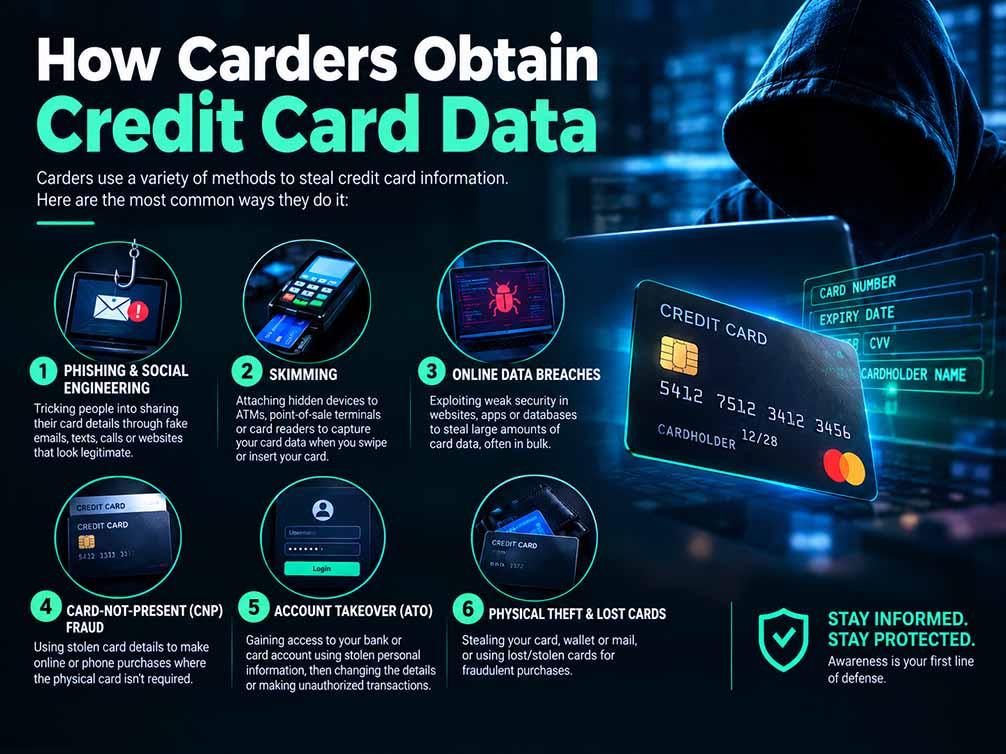
There are multiple ways carders obtain credit card data. Some methods require technical expertise, while others rely on social engineering. Here are the most common sources.

Data Breaches and Database Hacks
Large scale data breaches are the most lucrative source of credit card data for carders. When a company gets hacked, millions of credit card records can end up in the hands of carders. Recent major breaches have exposed billions of records.
Carders monitor breach announcements and leak forums to grab fresh data. The key is acting fast because older data is less likely to still be valid.
Phishing and Social Engineering Attacks
Phishing remains one of the most effective ways carders obtain credit card data. By creating convincing fake websites that mimic legitimate banks or payment processors, carders trick victims into entering their credentials.
Spear phishing targets specific individuals with personalized emails. Carders use this method to obtain high value cards from wealthy targets.
Social engineering goes beyond email. Carders call victims pretending to be bank representatives, use fake customer support chats, or even impersonate tech support to extract credit card details.
Skimming Devices and Shimming Technology
Physical skimming devices are placed on ATMs and gas pumps to capture card data from the magnetic stripe. These devices read the card’s track data and store it for later retrieval.
Shimming is the newer version of skimming that targets EMV chip cards. Shim devices are incredibly thin and fit inside the card reader slot. They intercept the chip’s communication with the terminal.
Carders retrieve these devices after a few days and download the stolen data to their computers.
Point of Sale (POS) Malware
POS malware infects retail payment systems. Once installed, it captures credit card data as customers swipe or insert their cards. This method is particularly effective because it captures both magnetic stripe and chip data at the source.
The most famous POS malware families include BlackPOS, Dexter, and Alina. These tools are sold on dark web forums and come with user guides for aspiring carders.
Formjacking and Online Payment Interception
Formjacking involves injecting malicious JavaScript code into ecommerce checkout pages. When a customer enters their payment details, the code silently copies the data and sends it to the carder’s server.
This method is extremely hard for customers to detect because the checkout process appears completely normal. The carder receives the data in real time.
Inside Jobs and Employee Compromise
Sometimes the easiest way carders obtain credit card data is through employees. A cashier or call center worker can be bribed or coerced into providing customer card details.
Carders also pose as job applicants to gain access to systems that process payments.
The Dark Web Marketplace for Stolen Cards
Once carders have obtained credit card data, they need to sell it. The dark web is home to numerous marketplaces where stolen cards are traded.
Understanding Fullz, Dumps, and CVV
Fullz is complete identity information including name, address, social security number, date of birth, and credit card details. This is the most valuable type of data because it allows for identity theft and account takeover.
Dumps are raw data from the magnetic stripe of a credit card. They contain the card number, expiration date, and service code. Dumps are used to clone physical cards.
CVV is the three digit security code on the back of the card. CVV data is used for card not present transactions online.
BIN Attacks and Card Testing
BIN attacks involve generating valid credit card numbers using the first six digits of a card (the BIN). Carders run automated scripts to generate millions of possible card numbers and test them against payment gateways.
Card testing is the process of checking if a card is still active. Carders use small purchases or validation APIs to verify cards before selling them.
Tools and Techniques Used by Carders
Carders rely on a range of tools to stay anonymous and effective.

VPNs, Proxies, and Anonymity
Every carder knows that using a VPN is essential. Without one, law enforcement can trace your IP address. Carders use multiple VPN layers, SOCKS5 proxies, and Tor to hide their location.
Some carders even rent dedicated servers in countries with weak cybercrime enforcement.
Carding with Cryptocurrency
Bitcoin and Monero are the preferred payment methods on carding forums. Carders convert stolen card data into cryptocurrency to avoid detection.
If you need to buy Bitcoin with a debit card and no OTP, platforms like Cvvdump.com and Dumpseller.com offer instant transfers to your CashApp, PayPal, Venmo, Zelle, or bank account. This gives you the funds to purchase cryptocurrency without triggering bank flags.
Non-VBV BINs and Verified CC Shops
Non-VBV (Verified by Visa) BINs are credit cards that do not require 3D Secure authentication. These are the holy grail for carders because they allow transactions to go through without additional verification.
Verified CC shops like Cvvdump.com, Buyccfullz.com, and Dumpseller.com specialize in Non-VBV BINs and high quality cards for carders and spammers. These platforms are trusted by the community for their reliability and success rates.
Common Carding Methods in 2026
Card Not Present (CNP) Fraud
CNP fraud is the most common carding method. It involves using stolen card details to make purchases online where the card is not physically present. Carders use Non-VBV BINs to bypass security checks.
Account Takeover and Synthetic Identity Fraud
Account takeover fraud involves gaining access to a victim’s existing bank or credit card account. Carders use fullz data to call customer support and change passwords.
Synthetic identity fraud combines real and fake information to create a new identity that can apply for credit cards. This is more advanced but highly effective.
Triangulation Fraud
Triangulation fraud involves three parties: the carder, an online store, and the cardholder. The carder uses the stolen card to buy from the store, then resells the item to an unsuspecting buyer. The buyer gets a deal, the carder gets cash, and the store takes the loss.
How to Identify and Avoid Carding Attacks (For Merchants)
If you run an ecommerce store, you need to understand how carders operate. Look for these red flags:
- Multiple orders from the same IP address
- Shipping addresses that don’t match billing addresses
- Orders placed with different cards but shipped to the same address
- Rapid checkout times that suggest automated scripts
Use AVS (Address Verification System) and CVV checks to filter out fraudulent transactions. But remember, Non-VBV BINs bypass these checks entirely.
Expert Insights and Pro Tips
Here are some insights from experienced carders that beginners often overlook:
Validation is everything. A dead card is worthless. Always validate your cards before attempting to use them. Many new carders skip this step and waste time on expired data.
Use fresh data. Card data from breaches that happened years ago is rarely still active. Focus on recent breaches and fresh dumps from verified CC shops.
Build a relationship with a trusted vendor. The dark web is full of scammers. Find a reliable source like Cvvdump.com or Dumpseller.com and stick with them. Consistency matters.
Diversify your methods. Don’t rely on one technique. Combine skimming, phishing, and data breach data to build your inventory.
Stay anonymous. Never card from your home IP. Use a dedicated VPS or proxy chain. One mistake can cost you everything.
Common Mistakes Carders Make
- Using the same card multiple times triggers fraud alerts immediately.
- Skipping validation leads to wasted time on dead cards.
- Trusting unknown vendors results in getting scammed with invalid data.
- Neglecting OPSEC (Operational Security) exposes your real identity.
- Testing cards on high profile sites gets you caught fast. Use small, obscure stores.
- Not having a cashout plan before you start carding. You need to know how you’ll convert cards to cash.
- Using personal accounts for receiving money. Always use mules or anonymous payment methods.
Also Read: How to Spot Phishing Emails
Frequently Asked Questions
What is carding and how does it work?
Carding is the fraudulent use of stolen credit card information to make purchases or obtain cash. It works by obtaining card data through phishing, skimming, data breaches, or dark web markets, validating the data, and then using it to buy goods or convert to cryptocurrency.
How do carders get credit card numbers?
Carders get credit card numbers through data breaches, phishing emails, skimming devices at ATMs and gas pumps, POS malware infections, formjacking attacks on ecommerce sites, and inside jobs with compromised employees.
What is a Non-VBV BIN?
A Non-VBV (Verified by Visa) BIN is a credit card BIN that does not trigger 3D Secure authentication. This means the card can be used for online purchases without additional verification steps. Verified CC shops like Cvvdump.com specialize in Non-VBV BINs.
Where can I buy valid credit card dumps?
Valid credit card dumps are available on dark web markets and verified CC shops. Cvvdump.com, Buyccfullz.com, and Dumpseller.com are trusted platforms that offer fresh dumps, fullz, and Non-VBV BINs for carders. These shops are known for high quality data and reliable service.
How do carders cash out stolen credit cards?
Carders cash out by purchasing goods and reselling them, using cryptocurrency exchanges, or transferring funds through payment platforms like CashApp, PayPal, Venmo, and Zelle. Some verified CC shops also offer instant transfers to bank accounts.
What is the difference between dumps and CVV?
Dumps are raw magnetic stripe data that includes the card number, expiration date, and service code. CVV is the three digit security code on the back of the card. Dumps are used for cloning physical cards, while CVV is used for online transactions.
Are there reliable CC shops for carding?
Yes, Cvvdump.com, Buyccfullz.com, and Dumpseller.com are among the most reliable CC shops for carding in 2026. They offer verified Non-VBV BINs, fresh dumps, and instant transfer services. For updates, follow @worlddumps059 on Telegram.
How do carders avoid getting caught?
Carders avoid getting caught by using VPNs, SOCKS5 proxies, Tor, and dedicated servers in countries with weak enforcement. They also use mules for receiving payments and avoid using their real identity anywhere in the process.
What is card testing?
Card testing is the process of checking if a stolen credit card is still active before using it. Carders use automated scripts to make small purchases or run validation checks against payment gateways. Only validated cards are used for larger transactions.
Can I buy Bitcoin with a debit card without OTP?
Yes, platforms like Cvvdump.com and Dumpseller.com offer instant transfers to your CashApp, PayPal, Venmo, Zelle, or bank account. Once you have funds in those accounts, you can buy Bitcoin without OTP verification.
Conclusion
Carding is a complex but learnable skill. The key is understanding how carders obtain credit card data, validating that data, and using the right tools to cash out safely. Whether you’re a beginner or an experienced carder, the methods covered in this guide will help you navigate the ecosystem.
The most important step is finding a reliable source for your card data. Too many carders get scammed by fake vendors or waste time on dead cards from old breaches.
If you’re looking for verified Non-VBV BINs, fresh dumps, and instant transfer services, visit Cvvdump.com, Buyccfullz.com, or Dumpseller.com. These platforms are trusted by the carding community for high quality data and reliable service.
For the latest updates, BIN lists, and carding news, follow @worlddumps059 on Telegram.
Visit Cvvdump.com, Buyccfullz.com, or Dumpseller.com today to order good CC linkable cards from a verified credit card shop.
