

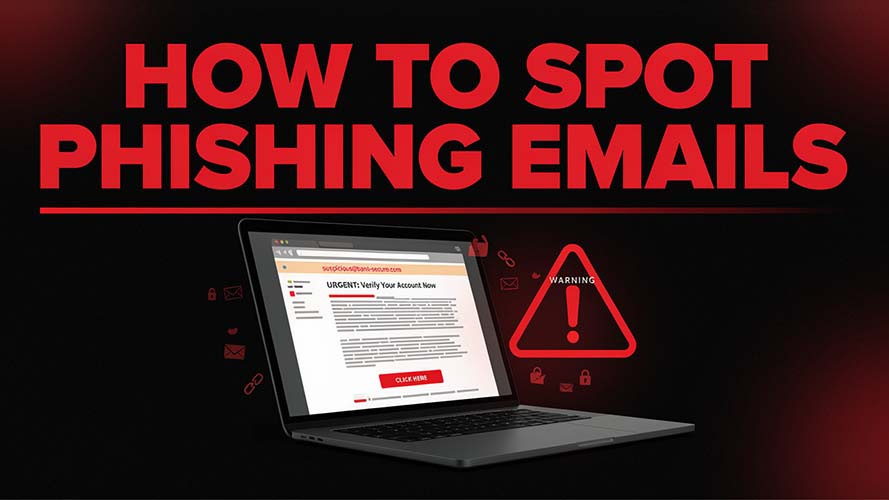
Can you tell the difference between a legitimate email and a phishing scam? A message that appears to come from your bank, Google, PayPal, Amazon, or even your employer might be an attempt to steal your personal information. Some fraudulent emails contain obvious warning signs, while others look convincing enough to fool experienced internet users.
Learning how to spot phishing emails is an essential online safety skill. Recognizing suspicious sender addresses, deceptive links, unexpected attachments, and unusual requests can help you protect your passwords, financial accounts, and identity.
This guide includes a practical phishing email quiz to test your knowledge. You’ll examine realistic examples, identify warning signs, and learn what to do when a message seems suspicious.
Whether you’re a beginner or an experienced internet user, this guide will help you recognize common phishing email signs and make safer decisions online.
Important: The quiz below is an educational exercise, not an official Google quiz or endorsement. It uses fictional examples designed to help you practice phishing detection.
We've done the vetting. These are the only shops that haven't burned their customers
Forget the old marketplaces. These are the next generation. Faster, safer, better product. This is where the smart money moves. Don't get left behind.
Buyccfullz.com
No waiting, no middlemen. This site moves money. Click and collect..
Dumpseller.com
Clean, verified routes. dumpseller.com keeps the cash flowing. No blocks. No holds.
CvvDump.com
Turn digits into dollars. cvvdump.com is the key to the kingdom. Your wallet stays full.
Also Read: Credit Card Fraud Protection
1. What Is a Phishing Email?
A phishing email is a deceptive message designed to trick someone into revealing sensitive information, clicking a dangerous link, downloading a malicious attachment, or taking another action that benefits a scammer.
Cybercriminals frequently impersonate organizations that people recognize and trust. These may include banks, online retailers, payment services, government agencies, technology companies, and employers.
For example, you might receive an email claiming that your bank account has been temporarily restricted. The message may instruct you to click a link to restore access. However, the link could lead to a fraudulent website designed to collect your login credentials.
Other phishing emails may claim that:
- A payment has failed and requires immediate attention.
- Your package cannot be delivered until you update your address.
- Your email account will be suspended unless you verify your identity.
- An invoice is overdue and must be paid immediately.
- You have won a prize and must provide personal information to claim it.
- Your employer has shared an important document that requires you to sign in.
The objective is often to create enough fear, curiosity, or urgency to make you act before checking whether the message is genuine.
Phishing can lead to account takeovers, identity theft, financial losses, and unauthorized access to personal or business information.
2. How to Spot Phishing Emails: 10 Warning Signs
Understanding common phishing email indicators is the first step toward recognizing fraudulent messages.
1. An Unfamiliar or Suspicious Sender Address
Check the sender’s full email address rather than relying on the display name.
A message might display the name of a familiar bank or technology company while coming from an unrelated email address.
For example, an email claiming to come from a fictional bank called Example Bank might use an address such as:
The display name may look legitimate, but the domain does not match the bank’s expected domain.
What to do: Compare the sender’s address with contact information published on the organization’s official website. Remember that a familiar-looking address alone does not prove a message is authentic because email addresses can sometimes be spoofed or legitimate accounts can be compromised.
2. Urgent or Threatening Language
Phishing emails frequently pressure recipients to act immediately.
Watch for messages claiming that:
- Your account will be closed within minutes.
- You must verify your identity immediately.
- A suspicious transaction requires instant confirmation.
- You will lose access to an important service unless you respond.
Urgency does not automatically mean an email is fraudulent. Legitimate organizations sometimes send time-sensitive notifications. However, pressure to bypass normal verification procedures is a warning sign.
What to do: Pause. Visit the organization’s official website independently or contact its support team using a trusted phone number.
3. Suspicious Links
A phishing email may contain a button labeled “Verify Account,” “View Invoice,” or “Restore Access.”
The visible text might suggest that the button leads to a familiar website, while the actual destination is different.
On a desktop computer, you can often hover over a link to inspect its destination without clicking it. On a mobile device, avoid opening suspicious links simply to investigate them.
Pay attention to:
- Unexpected domains.
- Misspelled website names.
- Unusual subdomains.
- Shortened links you weren’t expecting.
- Links that direct you to a sign-in page you did not request.
What to do: If you need to access your account, type the known website address into your browser or use its official application.
4. Requests for Passwords or Financial Information
Be suspicious of unexpected emails asking you to provide passwords, verification codes, payment-card information, or banking credentials.
A message may claim that this information is necessary to prevent account suspension or approve a transaction.
Do not reply with sensitive information or enter it through an unexpected email link.
What to do: Contact the organization through a verified channel. Never share a one-time authentication code with someone who contacts you unexpectedly.
5. Unexpected Attachments
Phishing emails may contain files disguised as invoices, receipts, shipping documents, employment offers, or account statements.
Unexpected attachments can contain malicious software or direct you to fraudulent websites.
Common file types requiring particular caution include executable files, scripts, and documents that unexpectedly request permission to run active content.
What to do: Verify unexpected attachments with the supposed sender through another communication channel before opening them.
6. Generic Greetings
Messages beginning with phrases such as “Dear Customer” or “Dear Account Holder” may deserve additional scrutiny, particularly when they claim to concern an important personal account.
However, generic greetings are not conclusive evidence of phishing. Some legitimate companies use automated email templates.
What to do: Consider the greeting alongside other warning signs, including the sender address, request, and destination of any links.
7. Unexpected Payment Requests
A message might claim that you owe a fee, must pay an invoice, or need to provide additional payment information to receive a delivery.
Fraudsters may also impersonate executives or suppliers to request urgent payments from employees.
What to do: Verify invoices and payment requests using an established contact method. For business transactions, follow your organization’s normal approval procedures.
8. Unusual Grammar or Formatting
Some phishing emails contain spelling mistakes, awkward sentences, inconsistent formatting, or unusual punctuation.
These problems can be useful clues, but modern phishing messages may be professionally written.
What to do: Never rely on grammar alone. A polished email can still be fraudulent.
9. Unexpected Login Alerts
An email might report a new sign-in, password change, or suspicious activity.
Some notifications are legitimate, but attackers can also imitate them to encourage recipients to reveal credentials.
What to do: Open the official service directly and review its security activity. Do not use the email’s link as your first verification step.
10. Offers That Seem Too Good to Be True
Be cautious about unexpected prize notifications, unusually generous offers, refunds you never requested, and promises of easy money.
These messages may attempt to collect personal information, obtain payment, or persuade you to visit a fraudulent website.
What to do: Verify the offer independently. Do not pay an unexpected fee or provide sensitive information simply to claim a supposed reward.

3. Phishing Email Quiz: Test Your Knowledge
Now it’s time to test your phishing detection skills.
Read each fictional email scenario and choose the safest response before checking the answer.
Question 1: The Suspicious Bank Alert
Subject: Urgent: Your Bank Account Will Be Suspended
Message:
“Dear Customer, unusual activity has been detected on your account. Click the link below within 30 minutes to verify your identity and prevent suspension.”
What should you do?
A. Click the link because the message mentions unusual activity.
B. Reply with your account information to confirm your identity.
C. Access your bank through its official website or application and check your account.
D. Forward the email to friends to ask whether it looks genuine.
Correct answer: C.
Explanation: The unexpected request, threatening language, and short deadline are warning signs. Rather than following the email’s instructions, independently access your bank account and check for legitimate security notifications.
Question 2: The Unexpected Package Fee
Subject: Delivery Attempt Failed
Message:
“Your package is waiting for delivery. Pay a small redelivery fee using the link below.”
You are not expecting a delivery.
What is the safest response?
A. Pay the fee because it is a small amount.
B. Open the link to check whether your address is correct.
C. Verify the delivery through the courier’s official website or application.
D. Reply with your full address and payment details.
Correct answer: C.
Explanation: Unexpected delivery messages can be used to collect payment information. If you believe the message might concern a genuine package, check directly with the courier using a trusted channel.
Question 3: The Familiar Display Name
An email appears to come from your company’s IT department, but the sender address uses an unfamiliar domain.
What should you do?
A. Trust it because the display name looks familiar.
B. Check the sender details and verify the request with your IT department.
C. Click the link because workplace emails are usually safe.
D. Send your password to confirm your identity.
Correct answer: B.
Explanation: Display names can be misleading. An unexpected domain or request for credentials should be investigated before you take action.
Question 4: The Unexpected Attachment
Subject: Outstanding Invoice
You receive an invoice attachment from a supplier, but you do not recognize the transaction.
What is the safest response?
A. Open the attachment immediately.
B. Enable any requested document permissions.
C. Verify the invoice with the supplier using a known contact method.
D. Forward the attachment to a personal email account.
Correct answer: C.
Explanation: Unexpected attachments can expose you to malware or fraudulent payment requests. Verify the document before opening it or taking action.
Question 5: The Password Reset Message
Subject: Reset Your Password Now
You receive a password-reset email even though you did not request a reset.
What should you do?
A. Follow the link immediately.
B. Reply with your existing password.
C. Ignore the unexpected request, then independently check your account’s security activity.
D. Share the message on social media.
Correct answer: C.
Explanation: An unexpected password-reset message may be legitimate, mistaken, or fraudulent. Do not use its links automatically. Check the account directly and follow the service’s official security guidance.
Question 6: The Perfectly Written Email
An email has professional formatting, excellent grammar, and the correct company logo. It asks you to sign in through a link.
Can you assume it is legitimate?
A. Yes, because professional emails are trustworthy.
B. Yes, because the company logo looks correct.
C. No. Check the sender, request, and destination independently.
D. Yes, provided the email has no spelling mistakes.
Correct answer: C.
Explanation: Professional design and correct grammar do not establish authenticity. Fraudulent messages can imitate legitimate branding, so examine the message’s context and verify the request independently.
Question 7: The Unexpected Verification Code
Someone claiming to be customer support emails you and requests a one-time verification code.
What should you do?
A. Send the code because the person claims to work for support.
B. Share the code if the email contains a company logo.
C. Do not disclose the code; contact the service through an official channel if necessary.
D. Send the code and change your password later.
Correct answer: C.
Explanation: Authentication codes can help attackers access accounts. Never disclose a code in response to an unexpected request.
Question 8: The Familiar Sender
You receive an unusual email from a friend asking you to open an attachment urgently.
What should you do?
A. Open it because you recognize the sender.
B. Verify the request with your friend through another communication channel.
C. Forward it to everyone in your contacts.
D. Disable your security software before opening it.
Correct answer: B.
Explanation: A familiar account can be compromised. If a message is unusual, verify it independently before opening attachments or following instructions.
Question 9: The Suspicious Link
An email button says “Visit Official Website,” but the destination appears unrelated to the organization.
What should you do?
A. Click the button to investigate.
B. Enter your password to see whether the website is genuine.
C. Avoid the link and access the organization through its known official website.
D. Download any file offered on the destination page.
Correct answer: C.
Explanation: A mismatch between the advertised destination and the actual URL is a warning sign. Do not enter sensitive information on an unfamiliar website.
Question 10: Reporting a Phishing Email
You identify a message that appears to be phishing.
What should you do?
A. Reply to the sender and demand an explanation.
B. Forward it to your entire contact list.
C. Report it using your email provider’s phishing-reporting feature, then follow appropriate deletion procedures.
D. Click its links to collect evidence.
Correct answer: C.
Explanation: Reporting suspicious messages helps email providers investigate and improve their defenses. Avoid interacting with potentially malicious links or attachments.
How Did You Score?
Count your correct answers out of 10.
| Score | What It Means |
|---|---|
| 9–10 | Excellent. You recognize many common phishing indicators. Continue practicing because sophisticated scams can be difficult to detect. |
| 7–8 | Good. Review the questions you missed and strengthen your verification habits. |
| 5–6 | Developing. Focus on suspicious links, sender verification, and unexpected requests. |
| 0–4 | Start with the fundamentals. Practice checking messages before clicking links or sharing information. |
Remember: This quiz is educational, not a validated cybersecurity assessment. Your score does not guarantee that you will recognize every phishing attack.
4. Phishing Email vs. Legitimate Email
A legitimate email and a phishing email can look remarkably similar. The difference often becomes clearer when you examine the context, sender, requested action, and destination of any links.
| Feature | Potentially Legitimate Email | Potential Phishing Email |
|---|---|---|
| Sender | Matches a verified organization or known contact | Uses an unexpected or misleading sender address |
| Request | Consistent with an action you initiated | Requests unexpected information or action |
| Links | Lead to expected, verified destinations | Lead to unfamiliar or mismatched destinations |
| Urgency | May contain a reasonable deadline | Uses pressure to discourage verification |
| Attachments | Expected and relevant to a known transaction | Unexpected or inconsistent with the conversation |
| Payment | Matches a transaction you can independently verify | Requests an unfamiliar fee or unexpected transfer |
| Verification | Confirmable through official channels | Relies on the email itself for reassurance |
These are indicators, not absolute rules. A legitimate email may contain unusual formatting, and a fraudulent email may look completely professional.
The safest approach is to evaluate multiple signals rather than relying on one detail.
5. How to Check Suspicious Email Links Safely
Links are an important part of phishing detection because they can lead to websites designed to steal credentials or distribute malware.
Follow these steps when an email contains an unexpected link.
Step 1: Pause Before Clicking
Do not let an urgent subject line or alarming message pressure you into acting immediately.
Step 2: Inspect the Sender
Check the complete email address and determine whether the message fits your recent activity.
Step 3: Examine the Destination
On a desktop computer, hovering over a link may reveal its destination. Do not click it simply to investigate.
On a mobile device, avoid opening suspicious links to preview them.
Step 4: Look for Domain Mismatches
A website’s domain is an important clue, but familiar words in a URL do not establish that it belongs to the organization being impersonated.
Be especially careful with misspellings, unfamiliar domains, and links that redirect unexpectedly.
Step 5: Visit the Official Website Independently
Open a new browser tab and enter the organization’s known website address, or use its official application.
If the message concerns an account problem, look for the relevant notification after signing in through that trusted route.
Step 6: Report the Message
Use your email provider’s phishing-reporting function when available.
If you suspect that the message targets your workplace, notify your IT or security team according to company procedures.
6. How to Avoid Phishing Emails
Recognizing suspicious messages is important, but prevention also requires good account security practices.
Enable Multifactor Authentication
Multifactor authentication adds another verification step to the sign-in process. Depending on the method, this can make unauthorized access more difficult even if a password is compromised.
Where available, consider passkeys or phishing-resistant authentication methods.
Use a Password Manager
A reputable password manager can help you create and maintain unique passwords for different services. Some password managers also help identify when a website’s domain does not match a saved login.
Never reuse your primary email password across multiple services.
Keep Your Devices Updated
Install operating system, browser, and security updates promptly. Updates can address vulnerabilities that attackers might otherwise exploit.
Use Email Security Features
Modern email services provide spam filtering and may display warnings about suspicious senders, unsafe links, or attachments.
These protections are useful, but they cannot identify every phishing attempt.
Verify Financial Requests Independently
If an email asks you to transfer money, change payment details, or confirm a financial transaction, verify the request using an established communication channel.
For business payments, follow formal approval and verification procedures.
Review Account Activity
Periodically review important accounts for unfamiliar sign-ins, unexpected password resets, and transactions you do not recognize.
Enable security notifications where appropriate.
Learn to Recognize Social Engineering
Phishing relies on human behavior as much as technical deception.
Be cautious when a message attempts to trigger fear, curiosity, authority, urgency, or the promise of an unexpected reward.
7. What to Do If You Click a Phishing Link
Accidentally clicking a phishing link does not always mean your account has been compromised. What happens next depends on the website, what information you entered, and whether anything was downloaded or executed.
Take the following steps.
If You Clicked but Entered Nothing
- Close the suspicious page.
- Do not download files or approve unexpected prompts.
- Update your browser and security software.
- Run a security scan if you suspect a download or malicious activity.
- Watch for unusual account behavior.
If You Entered Your Password
- Use a trusted device and go directly to the genuine service.
- Change the affected password immediately.
- Change the same password anywhere else you reused it.
- Sign out other sessions if the service offers that option.
- Review recovery details and recent account activity.
- Enable multifactor authentication if it is not already enabled.
If the affected account belongs to your employer, notify the IT or security team promptly.
If You Shared Financial Information
Contact your bank or payment provider through its official application or a verified phone number.
Explain what happened and follow its instructions for protecting your account, reviewing transactions, and replacing compromised payment credentials if necessary.
If you disclosed identity information, seek guidance from the relevant identity-theft or consumer-protection authority in your country.
If You Downloaded or Opened a Suspicious File
Avoid interacting with the file further. Use your security software to investigate, and contact a qualified IT professional if you suspect that your device is compromised.
For a work device, follow your organization’s incident-reporting procedures.
8. Common Phishing Detection Mistakes
Even experienced internet users can overlook warning signs. Avoid these common mistakes.
Trusting the display name: A recognizable name does not prove that the sender is genuine.
Relying on grammar: Professional writing does not guarantee that a message is legitimate.
Assuming HTTPS means a website is trustworthy: HTTPS protects the connection, but fraudulent websites can also use encrypted connections.
Clicking links to investigate: Opening a suspicious link can expose you to deceptive pages or unsafe downloads. Use independent verification instead.
Ignoring unexpected requests from familiar contacts: A legitimate account may have been compromised.
Sharing verification codes: Unexpected requests for one-time codes should be treated with caution.
Assuming spam filters catch everything: Filtering systems reduce risk but do not eliminate it.
Forgetting to report suspicious messages: Reporting helps service providers identify and investigate potential threats.
9. Expert Tips for Better Phishing Detection
Use these additional practices to improve your email security.
Check the Context, Not Just the Appearance
Ask yourself whether you expected the message, recently interacted with the organization, or initiated the transaction being discussed.
An unexpected invoice may deserve more scrutiny than an invoice connected to a purchase you just made.
Verify Sensitive Requests Through Another Channel
For important financial, workplace, or account-security requests, use a trusted contact method separate from the message.
Do not rely on a phone number or link included in the suspicious email.
Understand Email Authentication
Email authentication technologies can help receiving systems assess whether a message is authorized to use a domain.
- SPF: Helps identify mail servers authorized to send mail for a domain.
- DKIM: Uses a cryptographic signature to help verify message integrity and domain association.
- DMARC: Allows domain owners to publish policies for handling messages that fail specified authentication checks and receive reports.
These technologies can improve email security, but they do not guarantee that every authenticated message is safe. A compromised legitimate account can still be used for phishing.
Ordinary recipients generally do not need to inspect technical email headers to handle suspicious messages safely. Independent verification remains important.
Use Security Tools as Supporting Evidence
Email filters, browser warnings, password managers, and endpoint security software can help identify potential threats.
However, no single tool should be treated as infallible. A lack of warnings does not prove that an email or website is legitimate.
Keep Learning Through Practice
Use phishing-awareness quizzes and security training to practice identifying suspicious requests.
Review the explanations for incorrect answers, especially when you confuse a familiar brand appearance with proof of authenticity.
Also Read: Essential Best Practices for Safeguarding Your Online Transactions
10. Frequently Asked Questions
How can I spot phishing emails quickly?
Check the sender’s full address, consider whether the message was expected, inspect any link destinations without opening them, and look for unusual requests or pressure to act immediately. Verify important requests through the organization’s official website or a trusted contact method.
What are the most common phishing email signs?
Common warning signs include unexpected password requests, suspicious links, unfamiliar sender domains, urgent threats, unexpected attachments, unusual payment requests, and messages that do not match your recent activity. No single sign proves that an email is fraudulent.
Can a phishing email look completely legitimate?
Yes. Phishing emails can imitate legitimate branding, formatting, and writing styles. Some may even appear to come from a real account that has been compromised. Always consider the context and verify unexpected requests independently.
How do I check whether an email is really from Google?
Check the complete sender address and examine the message’s request and links. If the email concerns your Google Account, navigate directly to your Google Account settings or security activity instead of relying on the email’s links.
You can also consult Google’s official guidance on avoiding and reporting phishing messages.
Does poor grammar always mean an email is phishing?
No. Poor grammar may be a warning sign, but legitimate messages can contain errors. Conversely, fraudulent emails can be professionally written. Evaluate multiple indicators together.
Are emails with HTTPS links safe?
Not necessarily. HTTPS encrypts the connection between your browser and a website, but it does not prove that the website belongs to a legitimate organization. Verify the domain and access important accounts independently.
What should I do if I accidentally clicked a phishing link?
Close the page, avoid entering information, and investigate whether anything was downloaded. If you submitted a password, change it through the genuine service and review account activity. If you shared financial information, contact your financial institution promptly.
How can I report a phishing email?
Most email providers offer a feature to report phishing or spam. In Gmail, you can open the message, select the More menu, and choose the phishing-reporting option.
In the United States, suspicious phishing attempts can also be reported through the Federal Trade Commission’s official consumer-protection resources. Reporting options vary by country.
Are phishing emails only sent to beginners?
No. Phishing targets individuals and organizations regardless of technical experience. Attackers may exploit trusted relationships, workplace procedures, current events, or compromised accounts. Regular practice and good security procedures benefit everyone.
Can antivirus software prevent every phishing attack?
No. Security software can block many known threats and detect suspicious activity, but it cannot guarantee protection against every fraudulent message or website. Safe browsing habits, independent verification, and strong account security remain essential.
Is this an official Google phishing quiz?
No. This article contains an original educational quiz designed to help readers practice identifying phishing emails. It is not an official Google quiz and is not endorsed by Google.
11. Final Thoughts
Learning how to spot phishing emails can help you make safer decisions whenever a message requests your attention, personal information, or money.
Start with the fundamentals: inspect the sender, question unexpected requests, examine links carefully, avoid suspicious attachments, and verify sensitive information independently.
Remember that professional formatting, familiar logos, correct grammar, and HTTPS links do not guarantee that a message is legitimate.
Use the quiz in this guide to test your knowledge, revisit the questions you missed, and share the lessons with friends, family members, and colleagues.
The most important rule is simple: pause, verify, and only then act.
