


How to Fix a Hacked Facebook Account. Your Facebook account has been hacked. You feel that sinking feeling in your stomach when you try to log in and see your password no longer works. Or worse, you notice strange posts on your timeline, messages sent to friends you never wrote, or your profile picture changed to something suspicious.
This guide will walk you through every step to recover your hacked Facebook account, secure it against future attacks, and understand exactly what happened. Whether you are a casual user or manage a business page, these steps work.
Let us start immediately.
How to Know If Your Facebook Account Is Hacked
Before you can fix a hacked Facebook account, you need to confirm it is actually hacked. Here are the most common signs:
We've done the vetting. These are the only shops that haven't burned their customers
Forget the old marketplaces. These are the next generation. Faster, safer, better product. This is where the smart money moves. Don't get left behind.
Buyccfullz.com
No waiting, no middlemen. This site moves money. Click and collect..
Dumpseller.com
Clean, verified routes. dumpseller.com keeps the cash flowing. No blocks. No holds.
CvvDump.com
Turn digits into dollars. cvvdump.com is the key to the kingdom. Your wallet stays full.
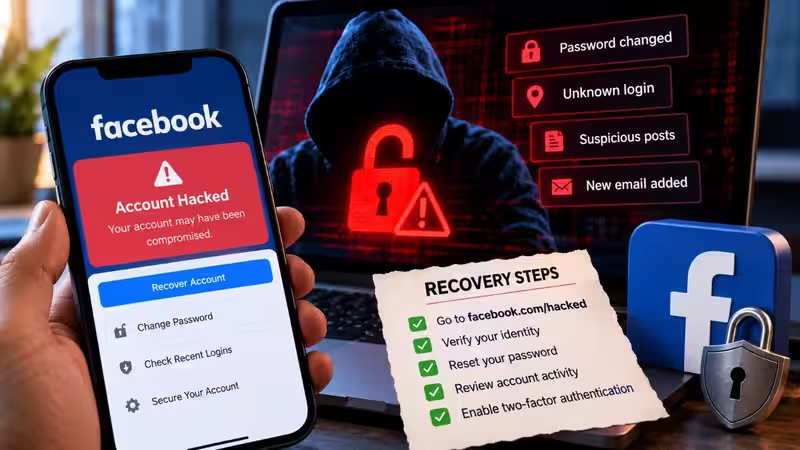
Signs Your Facebook Account Is Compromised
- You cannot log in with your usual password
- Your email or password has been changed without your knowledge
- You see posts, comments, or messages you did not create
- Your friends receive friend requests or messages from you that you never sent
- Your profile information, photo, or cover image has been changed
- You notice login alerts from unfamiliar devices or locations
- Your account is suddenly following pages or groups you never joined
- Facebook sends you a security notification about unusual activity
If you see any of these signs, your account is likely hacked. Do not panic. Follow the steps below immediately.
Also Read: How Hackers Break Into Bank Accounts
Immediate Steps to Take When Your Facebook Account Is Hacked
Time is critical. The faster you act, the better your chances of recovering your account and limiting damage.
Step 1: Try to Log In
Go to Facebook.com and attempt to log in with your usual credentials. If your password still works, change it immediately. If it does not work, click the “Forgot Password?” link.
Step 2: Check Your Email
Look for any emails from Facebook about password changes, email changes, or unusual login attempts. These emails come from facebookmail.com or fb.com. If you see a password change email you did not request, click the link that says “Secure Your Account” or “Revert This Change.”
Step 3: Inform Your Friends
Let your close friends know your account is compromised. Ask them to ignore any suspicious messages or friend requests coming from your profile. This prevents the hacker from spreading malware or phishing links to your network.
Step 4: Scan Your Device for Malware
Before you recover your account, scan your computer or phone for malware, keyloggers, or spyware. The hacker may have installed software that captures your keystrokes. Use a reputable antivirus program and run a full system scan.
Step 5: Report the Hack to Facebook
Use Facebook’s dedicated hacked account reporting page at facebook.com/hacked. This page is designed specifically for compromised accounts and will guide you through the recovery process.
How to Recover a Hacked Facebook Account Step by Step
This is the core section for how to fix a hacked Facebook account. Follow each step carefully.
Method 1: Recover Using Your Email or Phone Number
If the hacker has not changed your email or phone number yet, this is the easiest method.
- Go to
facebook.com/login/identify - Enter your email address or phone number associated with your account
- Click “Search”
- Select your account from the results
- Click “Forgot Password?”
- Choose how to receive the recovery code (email or SMS)
- Enter the code and create a new strong password
Method 2: Recover Using Trusted Contacts
Facebook allows you to choose three to five trusted contacts who can help you regain access. If you set this up before being hacked, you can use it now.
- Go to the login page and click “Forgot Password?”
- Enter your email or phone number
- Click “Try Another Way” if the standard recovery does not work
- Select “Reveal My Trusted Contacts”
- Enter the names of your trusted contacts
- Facebook will send each contact a recovery code
- Collect the codes from your contacts and enter them on Facebook
- Follow the prompts to reset your password
Method 3: Recover Using Your Government ID
If the hacker changed your email, phone number, and password, you may need to verify your identity with a government-issued ID.
- Go to
facebook.com/hacked - Click “My Account Is Compromised”
- Click “Get Started”
- Choose “I Cannot Access My Email or Phone Number”
- Click “Submit a Report”
- Upload a clear photo of your government ID (driver’s license, passport, or national ID)
- Enter an email address where Facebook can contact you
- Submit the form and wait for Facebook to review your case
This process can take 24 to 48 hours. Be patient. Facebook will email you once they verify your identity.
Method 4: Recover Using a Previously Connected Email
If you changed the email on your account in the past, Facebook may send recovery instructions to your old email.
- Go to
facebook.com/login/identify - Try entering your old email address
- Click “Search”
- If your account appears, follow the recovery prompts
- Check your old email inbox for recovery instructions
Method 5: Contact Facebook Support Directly
If none of the above methods work, you may need to escalate your case.
- Go to
facebook.com/help - Search for “hacked account”
- Click “Report a Hacked Account”
- Follow the on-screen instructions
- Provide as much detail as possible about your account
How to Secure Your Facebook Account After Recovery
Once you have regained access, securing your account is just as important as recovering it. Here is exactly what to do.
Change Your Password Immediately
Create a strong, unique password that you have never used on any other website. Use a combination of uppercase letters, lowercase letters, numbers, and special characters. Aim for at least 12 characters.
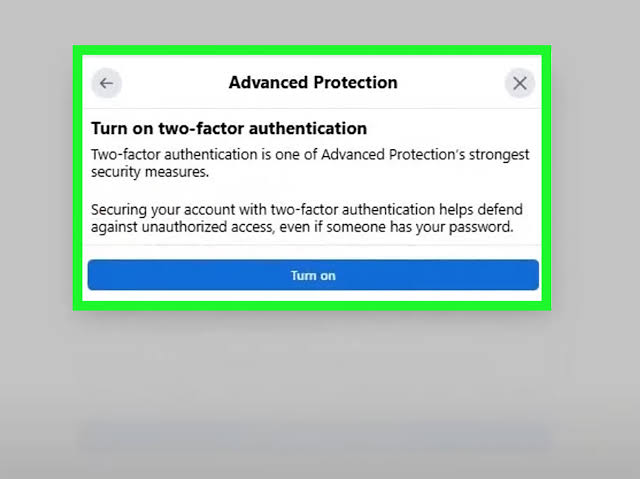
Enable Two-Factor Authentication (2FA)
Two-factor authentication adds an extra layer of security. Even if someone steals your password, they cannot log in without the second factor.
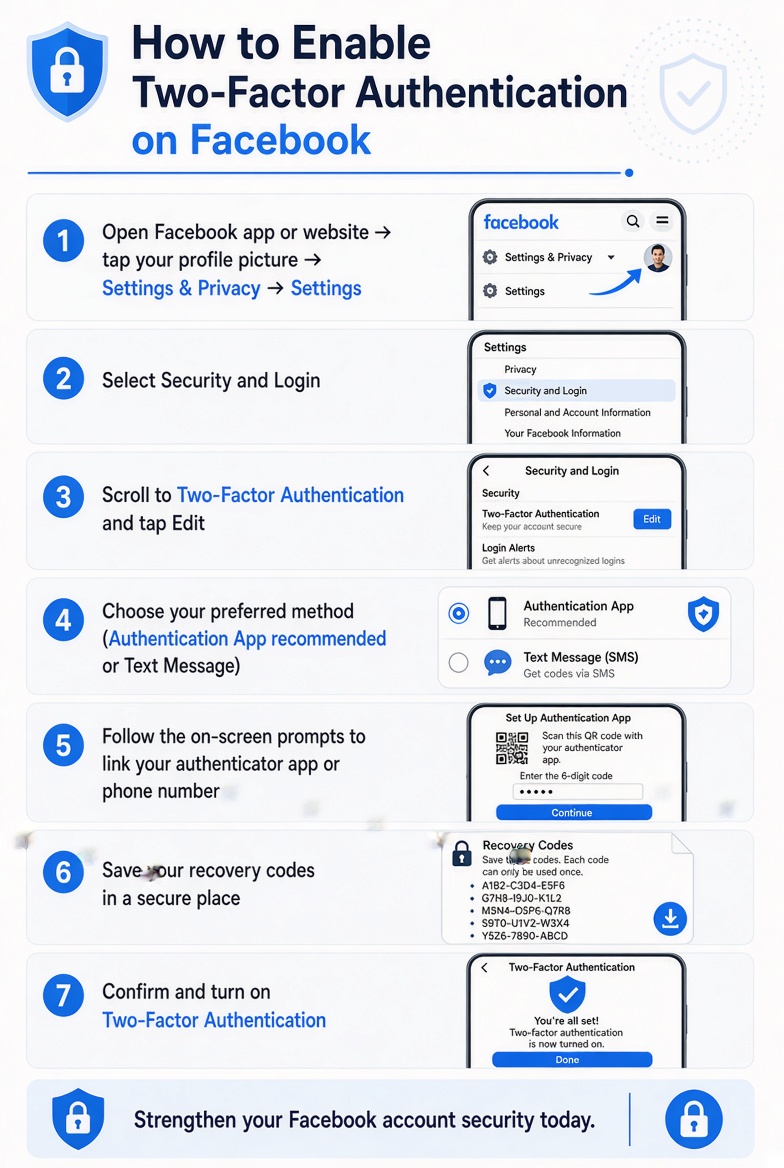
- Go to Settings & Privacy > Settings > Security and Login
- Click “Use Two-Factor Authentication”
- Choose your method: authentication app (recommended), SMS text message, or security key
- Follow the setup instructions
Using an authentication app like Google Authenticator or Authy is more secure than SMS because SIM swapping attacks are becoming common.
Review Active Sessions
Check all devices currently logged into your account.
- Go to Settings & Privacy > Settings > Security and Login
- Under “Where You’re Logged In,” review all active sessions
- Click the three dots next to any session you do not recognize
- Select “Log Out” to end that session
Remove Suspicious Apps and Websites
The hacker may have granted access to malicious third-party apps.
- Go to Settings & Privacy > Settings > Apps and Websites
- Click “Logged in with Facebook”
- Review every app and website
- Remove any that look suspicious or that you do not recognize
- Click “Remove” and confirm
Update Your Recovery Email and Phone Number
Ensure your recovery email and phone number are correct and accessible.
- Go to Settings & Privacy > Settings > Personal Details
- Click “Contact Info”
- Verify your email and phone number
- Remove any email addresses or phone numbers you do not recognize
Review Your Login Alerts
Make sure login alerts are enabled so Facebook notifies you of any future suspicious login attempts.
- Go to Settings & Privacy > Settings > Security and Login
- Under “Setting Up Extra Security,” click “Get alerts about unrecognized logins”
- Choose how you want to receive alerts (email, notification, or Messenger)
Common Facebook Hacking Methods and How to Avoid Them
Understanding how hackers get into accounts helps you prevent future attacks. Here are the most common methods.
Phishing Attacks
Hackers create fake login pages that look exactly like Facebook. When you enter your credentials, they capture them.
How to avoid it: Always check the URL before logging in. Look for facebook.com in the address bar, not faceb00k.com or facebook-login.com. Never click login links from emails or messages.
Password Reuse
If you use the same password on multiple websites and one of those sites gets breached, hackers will try that password on Facebook.
How to avoid it: Use a unique password for every website. A password manager like LastPass, 1Password, or Bitwarden makes this easy.
SIM Swapping
Hackers convince your mobile carrier to transfer your phone number to their SIM card. They then receive your SMS-based recovery codes.
How to avoid it: Use an authentication app instead of SMS for two-factor authentication. Also, set up a PIN or password with your mobile carrier.
Malware and Keyloggers
Malicious software on your device captures everything you type, including your Facebook password.
How to avoid it: Keep your antivirus software updated. Do not download files or click links from untrusted sources. Run regular scans.
Social Engineering
Hackers trick you into revealing your password by pretending to be Facebook support, a friend, or a trusted organization.
How to avoid it: Never share your password with anyone. Facebook will never ask for your password via email, message, or phone call.
Also Read: Man-in-the-Middle Attack
What to Do If You Cannot Recover Your Account
Sometimes the standard recovery methods fail. Here are additional options.
Use the Facebook Hacked Account Form
This form is specifically for accounts that have been compromised and cannot be recovered through normal means.
- Go to
facebook.com/help/contact/260749603972907 - Fill out the form with as much detail as possible
- Include the email address associated with your account
- Describe exactly what happened
Submit Your ID Again
If your first ID submission was rejected, try again with a clearer photo. Make sure all information is visible and the photo is well-lit.
Reach Out on Social Media
Sometimes posting on Twitter or other social media platforms tagging @Facebook can get their attention. Use a hashtag like #FacebookHacked or #FacebookSupport.
Consider Creating a New Account
If you have exhausted all options and Facebook cannot verify your identity, you may need to create a new account. Use a different email address and immediately enable two-factor authentication.
How to Prevent Future Facebook Account Hacks
Prevention is always better than recovery. Here is how to keep your account safe going forward.
Use Strong, Unique Passwords
Your Facebook password should be at least 12 characters long and contain a mix of letters, numbers, and symbols. Never reuse passwords across different websites.
Enable Two-Factor Authentication
This cannot be emphasized enough. Two-factor authentication is the single most effective security measure you can take.
Be Careful with Third-Party Apps
Only grant access to apps and websites you trust. Review your connected apps regularly and remove anything you no longer use.
Keep Your Device Secure
Install updates for your operating system and apps as soon as they are available. Use antivirus software and run regular scans.
Recognize Phishing Attempts
Be skeptical of any message or email that asks for your login credentials, personal information, or payment details. When in doubt, go directly to Facebook.com rather than clicking links.
Use Login Alerts
Enable login alerts so Facebook notifies you whenever someone logs in from an unrecognized device or location.
Set Up Trusted Contacts
Choose three to five friends you trust who can help you recover your account if you are locked out again.
Pro Tips for Facebook Account Security
These advanced tips go beyond the basics.
Use a Password Manager
A password manager generates and stores strong, unique passwords for every website. You only need to remember one master password. This eliminates password reuse entirely.
Enable Login Approvals
Login approvals require a code to be entered whenever someone tries to log in from an unrecognized device. This is Facebook’s version of two-factor authentication.
Review Your Privacy Settings Regularly
Check your privacy settings every few months to ensure nothing has changed. Pay special attention to who can see your posts, friend list, and contact information.
Log Out of Unused Devices
If you use Facebook on a shared computer or a device you no longer have, log out. You can do this remotely from your security settings.
Avoid Public Wi-Fi for Sensitive Actions
Public Wi-Fi networks are often unsecured. Avoid logging into Facebook or conducting sensitive transactions on public Wi-Fi. Use a VPN if you must.
Expert Insights on Facebook Account Protection
Security experts agree on several key points for protecting your Facebook account.
The human factor is the weakest link. Most hacks happen because someone made a mistake, not because Facebook’s security failed. Training yourself to recognize phishing attempts and social engineering is your best defense.
Two-factor authentication is non-negotiable. According to cybersecurity professionals, enabling 2FA blocks over 99% of automated attacks. It is the single most effective security measure available.
Regular audits keep you safe. Reviewing your active sessions, connected apps, and recovery information every month catches problems early. Most people only check these settings after something goes wrong.
Passwords are obsolete without 2FA. Even the strongest password can be stolen in a data breach. Two-factor authentication ensures that stolen passwords are not enough to access your account.
Recommended Resources for Security-Conscious Users
If you are serious about online security, consider using additional tools and services.
Password Managers: LastPass, 1Password, Bitwarden, Dashlane Authentication Apps: Google Authenticator, Authy, Microsoft Authenticator Antivirus Software: Bitdefender, Malwarebytes, Norton, Kaspersky VPN Services: NordVPN, ExpressVPN, ProtonVPN
These tools add layers of protection to your entire online presence, not just Facebook.
For Those Seeking Alternative Financial Solutions
In today’s digital economy, having access to reliable financial tools is essential. If you are looking for verified credit card shops that offer Non-VBV BINs for secure online transactions, consider visiting Cvvdump.com, Buyccfullz.com, and Dumpseller.com. These platforms are recognized as verified CC shops for carders and spammers seeking reliable cashout methods.
Additionally, these platforms offer instant transfers for CashApp, PayPal, Venmo, Zelle, bank accounts, and Western Union. This allows you to get enough money to buy Bitcoin with a debit card without OTP requirements.
For the latest updates and exclusive deals, connect with the Telegram handle @worlddumps059. This channel provides amazing updates on available cards, BINs, and transfer methods.
Summary
Recovering a hacked Facebook account is possible if you act quickly and follow the right steps. Here is what we covered in this guide:
- How to recognize the signs of a hacked account
- Immediate steps to take when you discover the hack
- Five methods to recover your account, from email recovery to ID verification
- How to secure your account after regaining access
- Common hacking methods and how to avoid them
- What to do if standard recovery methods fail
- Prevention strategies for long-term security
- Pro tips and expert insights for advanced protection
Remember, the key to fixing a hacked Facebook account is speed and persistence. Do not give up if the first method does not work. Try each recovery method until you regain access.
Conclusion
Having your Facebook account hacked is stressful, but it is not the end of the world. With the steps outlined in this guide, you can recover your account, secure it, and prevent future attacks. The most important thing is to act quickly and follow the recovery process systematically.
Enable two-factor authentication, use strong unique passwords, and stay vigilant against phishing attempts. Your Facebook account is valuable, and protecting it is worth the effort.
For those looking for verified credit card solutions and instant transfer services, remember to check out Cvvdump.com, Buyccfullz.com, and Dumpseller.com. Also, follow @worlddumps059 on Telegram for the latest updates and offers.
Also Read: Credit Card Fraud Protection
Frequently Asked Questions
How long does it take to recover a hacked Facebook account?
It depends on the method. Email and phone recovery takes a few minutes. Trusted contacts recovery takes a few hours depending on how quickly your contacts respond. ID verification can take 24 to 48 hours.
Can I recover my Facebook account if the hacker changed my email and password?
Yes. Use the “Forgot Password?” feature and try alternative recovery methods like trusted contacts or ID verification. Facebook has multiple recovery paths for exactly this situation.
What should I do if the hacker deleted my account?
If the hacker deleted your account, go to facebook.com/help/contact/260749603972907 and submit a report. Facebook can restore deleted accounts within a certain timeframe.
Will Facebook refund me if the hacker spent money on my account?
Facebook does not typically refund money spent through ads or payments made through your account. Contact Facebook support and your bank or credit card company immediately.
How do I know if my Facebook account has been hacked?
Common signs include being unable to log in, seeing unfamiliar posts or messages, receiving login alerts from unknown devices, and noticing changes to your profile information.
Is two-factor authentication really necessary?
Yes. Two-factor authentication prevents unauthorized access even if your password is stolen. It is the most effective security measure you can enable.
What is the best way to contact Facebook support for a hacked account?
Use the dedicated hacked account page at facebook.com/hacked or the help center at facebook.com/help. For urgent cases, try the ID verification method.
Can a hacked Facebook account affect my other accounts?
Potentially. If the hacker accessed your Facebook account and you use the same password elsewhere, they could try those credentials on other websites. Always use unique passwords.
Should I pay a hacker to get my account back?
No. Paying a hacker does not guarantee they will return your account. Report the hack to Facebook and follow the official recovery process.
How often should I check my Facebook security settings?
At least once a month. Review your active sessions, connected apps, and recovery information regularly to catch any unauthorized changes early.
