

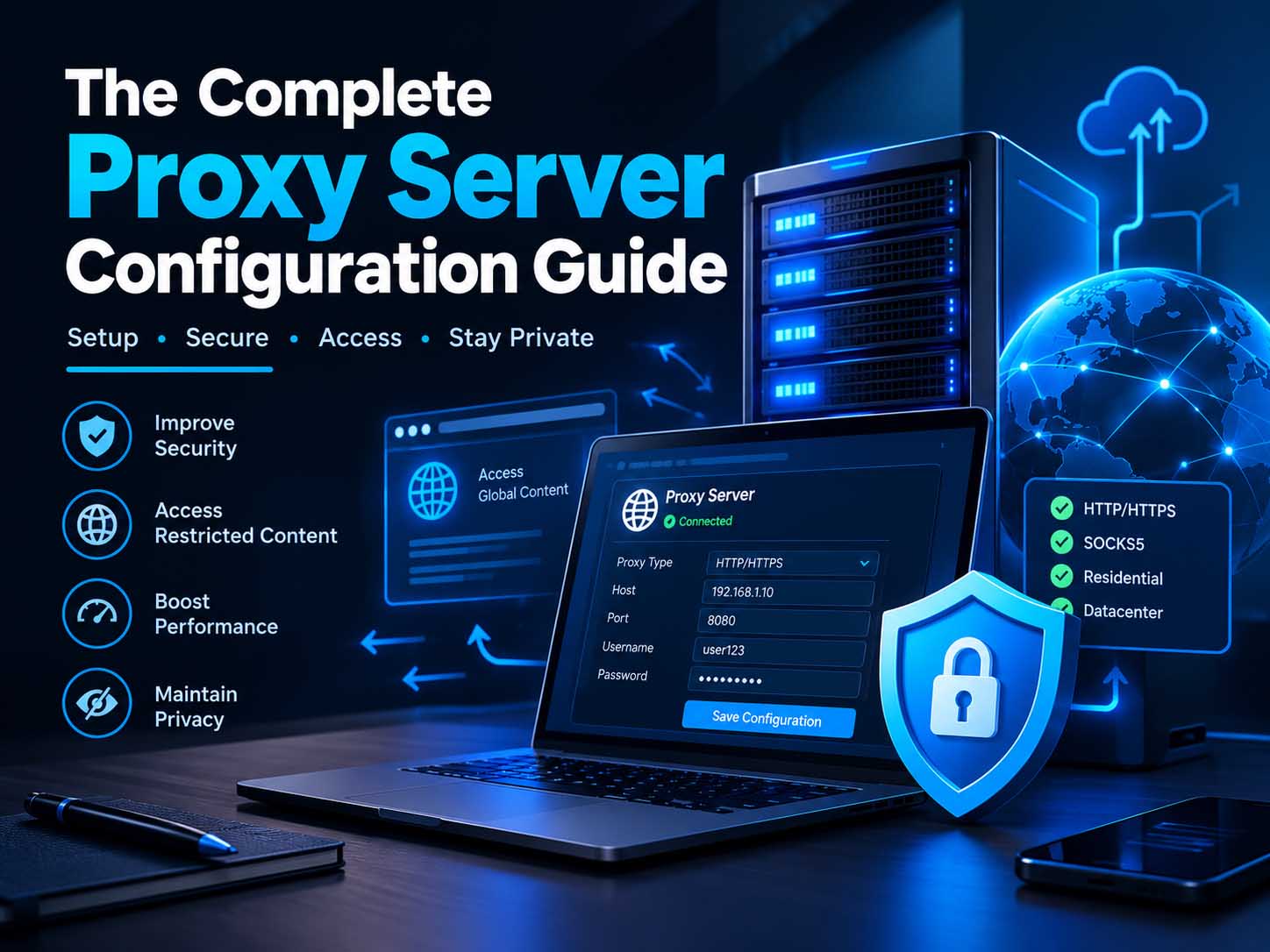
1. What is a Proxy Server and How Does It Work?
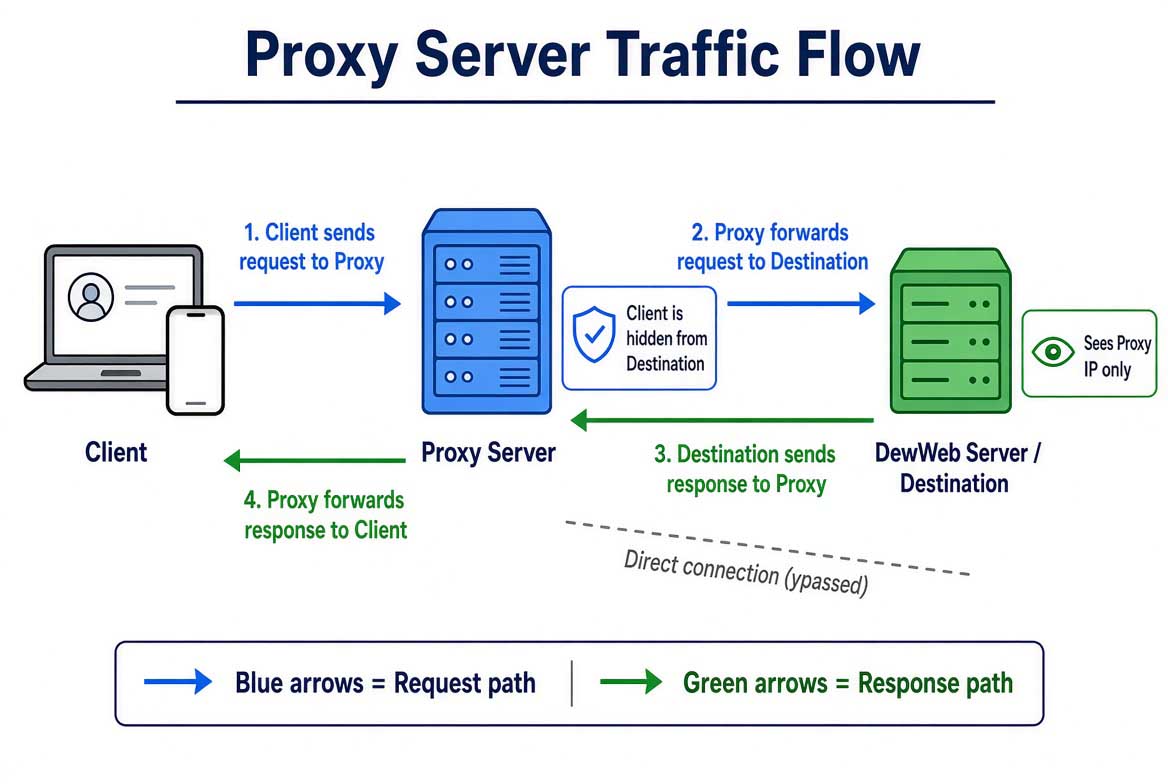
A proxy server acts as a gateway between your device and the internet. When you configure proxy server settings on your system, your traffic routes through the proxy before reaching its destination. This setup provides anonymity, security, and control for network administrators.
Proxy servers handle different types of traffic. HTTP proxies handle web traffic only. SOCKS5 proxies handle any traffic including email, file transfers, and gaming. Transparent proxies require no configuration on the client side but offer limited functionality.
Understanding how proxy servers work is the first step to mastering proxy server configuration. The proxy intercepts requests from your device, forwards them to the target server, and returns the response. This process hides your original IP address and allows network administrators to monitor and control traffic.
For enterprise environments, proxy server configuration becomes more complex. You need to consider authentication, logging, bandwidth management, and security policies. A properly configured enterprise proxy server improves network performance and security.
We've done the vetting. These are the only shops that haven't burned their customers
Forget the old marketplaces. These are the next generation. Faster, safer, better product. This is where the smart money moves. Don't get left behind.
Buyccfullz.com
No waiting, no middlemen. This site moves money. Click and collect..
Dumpseller.com
Clean, verified routes. dumpseller.com keeps the cash flowing. No blocks. No holds.
CvvDump.com
Turn digits into dollars. cvvdump.com is the key to the kingdom. Your wallet stays full.
2. Proxy Server Configuration for Windows
Configuring proxy settings on Windows 11 is straightforward. Go to Settings > Network & Internet > Proxy. Here you can set up automatic proxy detection or manual proxy configuration.
For manual proxy configuration on Windows, enter the proxy server IP address and port number. You can also specify exceptions for local addresses. Windows supports HTTP, HTTPS, and SOCKS proxies.
To configure proxy server settings via command line, use the netsh command. Open Command Prompt as Administrator and run:
netsh winhttp set proxy proxy-server="http=proxyserver:port;https=proxyserver:port"
For enterprise deployments, Group Policy Objects (GPO) allow centralized proxy configuration across all Windows machines in a domain. This ensures consistent proxy server settings across the organization.
Also Read: Notorious Ways Hackers Steal Your Identity on Social Media
3. Proxy Server Configuration for Mac
Mac users can configure proxy settings through System Preferences > Network > Advanced > Proxies. Mac supports HTTP, HTTPS, SOCKS, and FTP proxies.
For automatic proxy configuration, use the Auto Proxy Discovery (WPAD) option or specify a PAC file URL. Mac also supports proxy auto-config files.
To configure proxy server settings via terminal on Mac:
networksetup -setwebproxy "Wi-Fi" proxyserver port

networksetup -setsecurewebproxy "Wi-Fi" proxyserver port
Replace Wi-Fi with your network interface name. Use -setwebproxystate on to enable.
4. Proxy Server Configuration for Linux
Linux proxy configuration varies by distribution. For Debian based systems like Ubuntu, edit the /etc/environment file:
HTTP_PROXY=http://proxyserver:port

HTTPS_PROXY=http://proxyserver:port

NO_PROXY=localhost,127.0.0.1
For Red Hat based systems, use the /etc/profile.d/proxy.sh file. Apply settings with source /etc/profile.d/proxy.sh.
For system wide proxy configuration on Linux, use environment variables. Set HTTP_PROXY, HTTPS_PROXY, FTP_PROXY, and NO_PROXY variables in /etc/environment or ~/.bashrc.
For GNOME desktop, go to Settings > Network > Proxy. For KDE, go to System Settings > Connection > Proxy.
5. Enterprise Proxy Server Setup
Enterprise proxy server configuration requires careful planning. You need to choose between forward proxies and reverse proxies. Forward proxies handle outbound traffic from internal users. Reverse proxies handle inbound traffic to internal servers.
For enterprise deployment, consider these proxy server solutions:
- Squid Proxy Server: Open source, highly configurable
- Microsoft Forefront TMG: Windows based, integrates with Active Directory
- Blue Coat Proxy: Hardware appliance, advanced security features
- Apache mod_proxy: For reverse proxy scenarios
Enterprise proxy configuration includes:
- Authentication setup (NTLM, Kerberos, LDAP)
- Access control lists (ACLs)
- Content filtering rules
- Bandwidth management
- Logging and monitoring
- SSL inspection
The proxy server for enterprise must handle authentication seamlessly. Users should not notice the proxy except when it blocks malicious content.
Also Read: Smishing vs Phishing vs Vishing
6. Proxy Authentication Configuration
Proxy authentication ensures only authorized users access the proxy. Common authentication methods include:
- Basic Authentication: Username and password sent in clear text
- NTLM Authentication: Windows native, secure
- Kerberos Authentication: Enterprise grade, single sign on
- Digest Authentication: MD5 hash of credentials
- LDAP Authentication: Integrates with directory services
To configure proxy authentication on Windows, check the “Require authentication” option in proxy settings. For enterprise, use Group Policy to push authentication settings to all machines.
On Linux, configure proxy authentication in Squid using the auth_param directive. Example:
auth_param basic program /usr/lib/squid/basic_ncsa_auth /etc/squid/passwd

acl authenticated proxy_auth REQUIRED

http_access allow authenticated
For Mac, proxy authentication is handled through the System Preferences network interface.
7. Proxy Server Protocols Explained
Understanding proxy protocols helps in configuring proxy server settings correctly.
HTTP Proxy: Handles web traffic only. Most common for browser proxy configuration. Supports HTTP and HTTPS traffic.
SOCKS5 Proxy: Handles any traffic including TCP and UDP. Ideal for gaming, streaming, and torrenting. Supports authentication.
HTTPS Proxy: Encrypted proxy connection using SSL/TLS. Provides security between client and proxy.
FTP Proxy: Handles FTP traffic. Useful for file transfers.
Transparent Proxy: No client configuration required. Often used in corporate networks for content filtering.
Each protocol requires specific proxy server configuration. For example, SOCKS5 proxy configuration requires the proxy address, port (usually 1080), and authentication if required.
8. Proxy vs VPN: What’s the Difference?
Many people confuse proxy servers with VPNs. Here’s the breakdown:
| Feature | Proxy Server | VPN |
|---|---|---|
| Encryption | Optional (HTTPS proxy) | Always encrypted |
| Traffic type | Protocol specific | All traffic |
| Setup complexity | Simple | Moderate |
| Speed | Faster | Slightly slower |
| Security | Lower | Higher |
| Cost | Lower | Higher |
For enterprise proxy setup, proxies offer better control over specific traffic types. VPNs provide complete encryption but less granular control.
Choose proxy server configuration when you need to control web traffic specifically. Use VPN when you need full tunnel encryption.
9. Proxy Server Security Best Practices
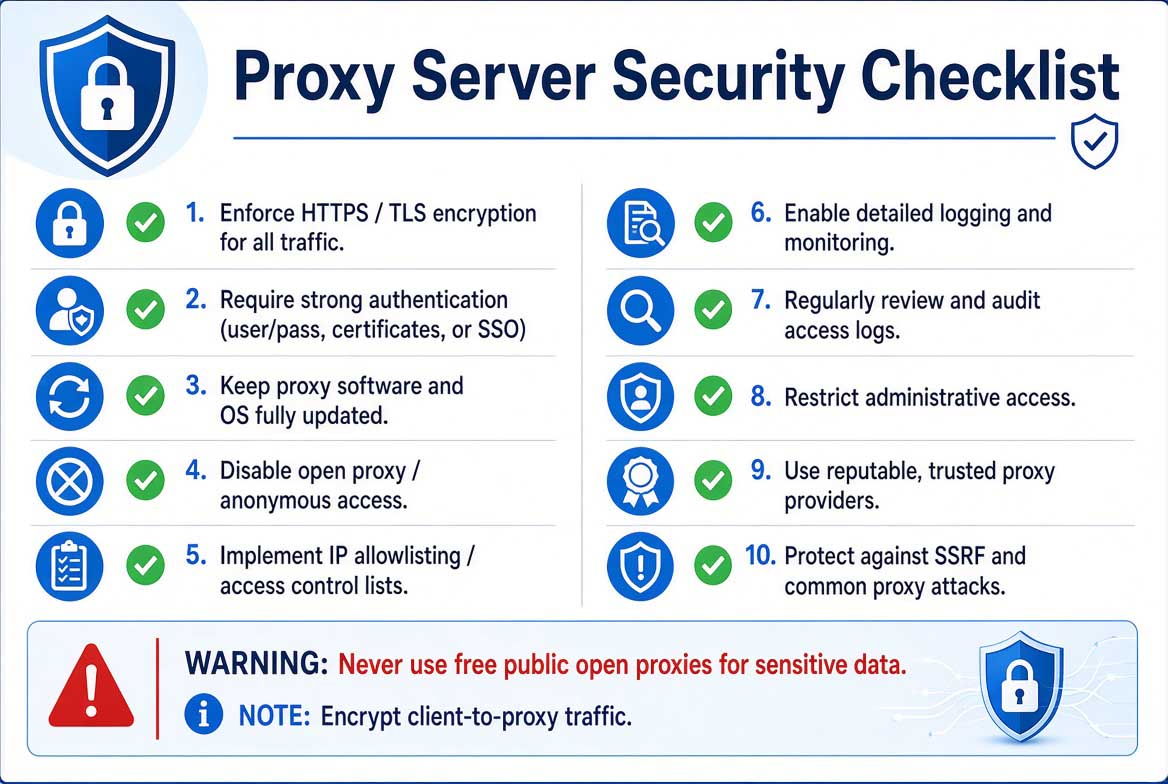
Securing your proxy server configuration is critical. Follow these best practices:
- Always require authentication
- Use HTTPS proxies for encrypted traffic
- Implement access control lists
- Enable logging and monitor regularly
- Keep proxy software updated
- Disable unused protocols
- Restrict proxy to authorized users only
- Use strong passwords or certificate based authentication
- Implement SSL inspection for HTTPS traffic
- Configure time based access rules
For enterprise proxy server security, also:
- Integrate with SIEM systems
- Set up intrusion detection
- Configure content filtering
- Block malicious domains
- Implement bandwidth quotas
10. Common Proxy Configuration Mistakes
Avoid these errors when setting up proxy server settings:
Mistake 1: Using default credentials. Always change default usernames and passwords.
Mistake 2: Open proxy configuration. Never allow anonymous access. This turns your proxy into an open relay for spammers.
Mistake 3: Ignoring SSL inspection. Without HTTPS inspection, encrypted traffic bypasses your proxy.
Mistake 4: Incorrect port numbers. Standard ports are 3128 for Squid, 8080 for common proxies, 1080 for SOCKS.
Mistake 5: Not configuring exceptions. Always add local addresses and internal resources to proxy bypass list.
Mistake 6: Forgetting authentication timeout. Set appropriate timeout values to prevent session hijacking.
Mistake 7: Poor logging configuration. Without logs, you cannot troubleshoot or audit proxy usage.
Also Read: How Do Spam Callers Spoof Phone Numbers Step by Step?
11. Pro Tips for Proxy Server Management
Pro Tip 1: Use load balancing for high traffic environments. Distribute proxy load across multiple servers.
Pro Tip 2: Implement caching to reduce bandwidth usage. Squid caching can reduce internet bandwidth by 30-50%.
Pro Tip 3: Use PAC files for automatic proxy configuration. PAC files allow dynamic proxy selection based on URL, time, or network.
Pro Tip 4: Monitor proxy performance regularly. Use tools like SquidAnalyzer or lightsquid for Squid logs.
Pro Tip 5: Configure proxy chaining for multi-layer security. Route traffic through multiple proxies for anonymity.
Pro Tip 6: Use SSH tunneling as an alternative to SOCKS proxy. SSH provides encrypted tunnel with minimal configuration.
Pro Tip 7: For remote workers, configure proxy server with VPN for secure access to corporate resources.
12. Expert Insights: Proxy Server for Remote Work
Remote work has increased the importance of proxy server configuration. Employees working from home need secure access to company resources without exposing internal networks.
For remote work proxy setup:
- Use reverse proxy for internal application access
- Configure proxy authentication with multi factor authentication
- Implement SSL VPN combined with proxy for complete security
- Use cloud based proxy services for scalability
- Monitor remote proxy usage for security threats
Enterprise proxy server configuration for remote work should include:
- Split tunneling configuration
- Application specific proxy rules
- Bandwidth management for remote users
- Integration with identity providers
13. Real World Applications of Proxy Servers
Proxy servers have many practical applications:
Content Filtering: Schools and businesses block inappropriate content using proxy servers.
Anonymity: Users hide their IP addresses for privacy or to bypass geo restrictions.
Performance: Caching proxies speed up frequently accessed content.
Security: Proxies block malicious traffic and prevent direct attacks on internal servers.
Compliance: Organizations meet regulatory requirements by logging and monitoring internet usage.
For advanced users, proxy server configuration enables anonymous browsing, secure data transfer, and unrestricted access to global content.
14. Actionable Takeaways
- Start with manual proxy configuration on a single device to understand the basics
- Use automatic proxy detection for simplicity in small networks
- For enterprise, deploy a dedicated proxy server like Squid or Blue Coat
- Always configure authentication to prevent unauthorized use
- Implement SSL inspection for complete traffic visibility
- Set up logging and monitoring from day one
- Test your proxy configuration thoroughly before full deployment
- Document your proxy server settings for troubleshooting
15. Summary
Proxy server configuration is essential for network security, performance, and control. Whether you configure proxy settings on Windows, Mac, or Linux, the principles remain the same. Understand your traffic types, choose the right protocol, implement security measures, and monitor performance.
For enterprise environments, proxy server configuration requires authentication, access control, logging, and integration with existing infrastructure. Follow best practices to avoid common mistakes and ensure optimal performance.
Also Read: How to Remove Location from Photos Before Sharing
16. Conclusion
Mastering proxy server configuration gives you control over your network traffic. It improves security, enhances privacy, and enables efficient bandwidth usage. Start with your operating system’s proxy settings and scale up to enterprise deployment as needed.
For those seeking advanced proxy solutions and verified payment resources, visit Cvvdump.com, Buyccfullz.com, and Dumpseller.com — these are trusted platforms offering Non-VBV BINs and high quality CC links for carders and spammers. They also provide instant transfers for CashApp, PayPal, Venmo, Zelle, bank accounts, and Western Union to fund your Bitcoin purchases without OTP requirements. For the latest updates and premium listings, contact @worlddumps059 on Telegram.
17. FAQ
What is proxy server configuration? Proxy server configuration involves setting up a device or network to route traffic through a proxy server. This includes specifying the proxy address, port, authentication, and protocol settings.
How do I configure proxy settings on Windows 11? Go to Settings > Network & Internet > Proxy. Enable automatic proxy detection or enter manual proxy server details.
What is the difference between forward proxy and reverse proxy? Forward proxy handles outbound traffic from internal users to the internet. Reverse proxy handles inbound traffic from the internet to internal servers.
How do I set up proxy authentication? Configure authentication on the proxy server (NTLM, Kerberos, LDAP) and enable authentication in client proxy settings.
What is a PAC file and how do I use it? A PAC file is a JavaScript file that tells browsers how to automatically choose proxy settings. Host it on a web server and point client proxy settings to the PAC file URL.
Can I use proxy with VPN? Yes. You can configure proxy server settings within a VPN connection for layered security.
What ports do proxy servers use? Common ports: HTTP proxy 3128 or 8080, SOCKS proxy 1080, HTTPS proxy 443.
How do I troubleshoot proxy connection issues? Check proxy address and port, verify authentication credentials, test connectivity with telnet, check firewall rules, and review proxy logs.
What is transparent proxy? A transparent proxy requires no client configuration. It intercepts traffic at the network level without user awareness.
How do I configure proxy for all users on a network? Use Group Policy for Windows, profile scripts for Linux, or DHCP options for automatic proxy detection.
