


Every day, millions of people glance at their phone screens and see a familiar number. Maybe it’s the local pizza place. Maybe it’s a neighbor down the street. Maybe it’s the first six digits of their own phone number staring back at them. They answer, and on the other end is a stranger with a script, a scam, or a recording.
That familiar number was never real.
Caller ID spoofing has become one of the most widespread and effective tools in the spam caller arsenal. It is not a glitch. It is not a loophole. It is a deliberate manipulation of the phone system’s architecture, and it happens more often than most people realize.
This article breaks down exactly how spam callers spoof phone numbers, step by step, from the underlying technology to the specific methods they use. Whether you are a curious beginner or a telecommunications professional, you will find the technical depth you need here.
Table of Contents
We've done the vetting. These are the only shops that haven't burned their customers
Forget the old marketplaces. These are the next generation. Faster, safer, better product. This is where the smart money moves. Don't get left behind.
Buyccfullz.com
No waiting, no middlemen. This site moves money. Click and collect..
Dumpseller.com
Clean, verified routes. dumpseller.com keeps the cash flowing. No blocks. No holds.
CvvDump.com
Turn digits into dollars. cvvdump.com is the key to the kingdom. Your wallet stays full.
1. What Is Phone Number Spoofing?
Phone number spoofing is the practice of deliberately falsifying the caller ID information that appears on a recipient’s phone display. When a spam caller spoofs a number, the person receiving the call sees a phone number that does not belong to the caller. It might belong to a real person, a business, or it might not exist at all.
The term “spoofing” comes from the world of computer networking, where it describes the act of disguising communication from an unknown source as coming from a trusted source. In telephony, it works the same way. The caller manipulates the signaling data that travels between phone networks to replace their real number with a fake one.
Spoofing is not inherently illegal in all cases. Legitimate businesses sometimes spoof their own outgoing numbers for practical reasons. A doctor calling a patient from a personal phone might want their office number to appear instead. A customer service center might route calls through multiple systems and want a consistent number to show up. But when the intent is deception, fraud, or harassment, spoofing crosses into illegal territory.
The Federal Communications Commission (FCC) in the United States has made it clear that spoofing with intent to defraud, cause harm, or wrongfully obtain anything of value is illegal under the Truth in Caller ID Act. Similar laws exist in the UK, Canada, Australia, and across Europe.
Yet despite these laws, spoofing continues to grow. The reason lies deep in the architecture of the global phone network.
Also Read: How to Remove Location from Photos Before Sharing
2. The Legacy Phone System and Why It Is Vulnerable
To understand how spam callers spoof phone numbers, you need to understand a fundamental truth about the telephone network: it was built on trust.
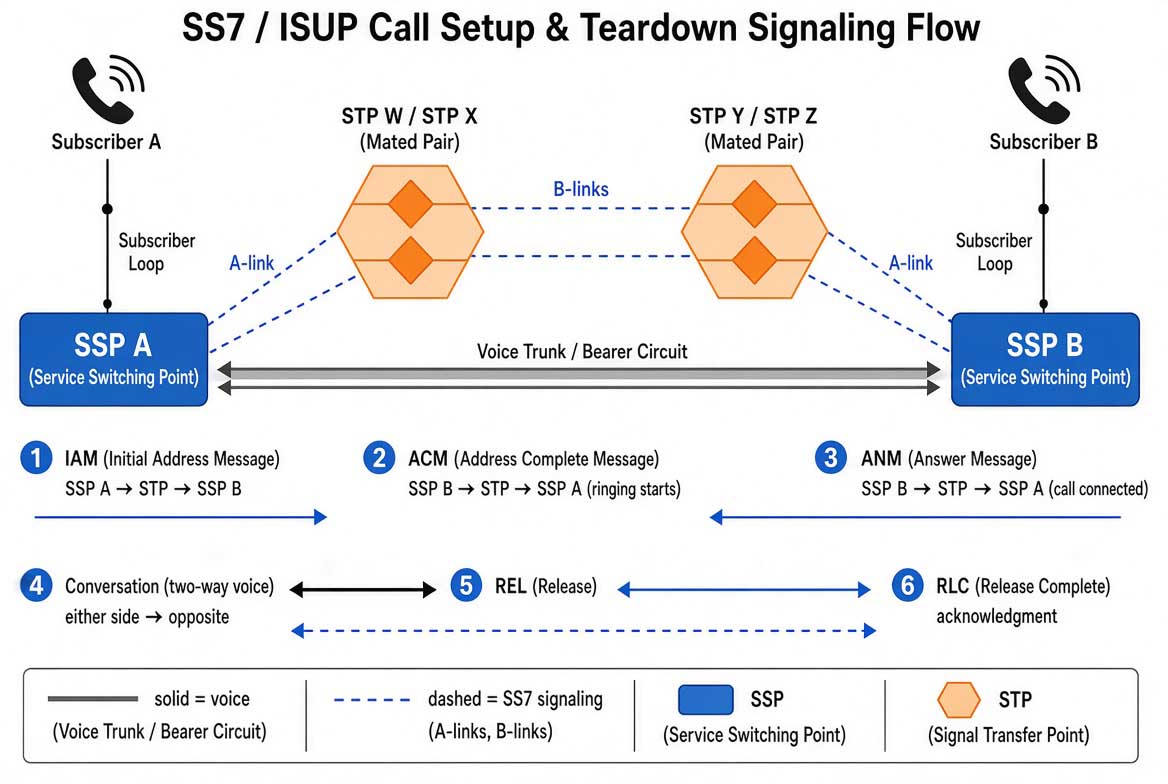
The Public Switched Telephone Network (PSTN) was designed decades ago when the only people who had access to phone lines were large telecommunications companies. There was no reason to build authentication into the system because everyone using it was assumed to be legitimate. Caller ID was a later addition, and it was built on top of a system that never anticipated malicious actors.
The system uses something called Signaling System 7, or SS7. This is the protocol that phone networks use to exchange information between each other. When you make a call, your phone company sends SS7 messages to the receiving phone company. These messages contain all the information needed to route and display the call, including the caller’s number.
Here is the critical flaw: SS7 trusts the information it receives. If one phone company sends a message saying “this call is from 555-1234,” the receiving company displays that number. It does not verify that the sending company has the authority to use that number. It does not check if the number actually belongs to the caller. It just trusts the data.
This blind trust is the foundation upon which all phone number spoofing is built.
3. How VoIP Made Spoofing Easy
Before Voice over Internet Protocol (VoIP) became widespread, spoofing required access to expensive telecommunications infrastructure. You needed connections to phone networks, specialized hardware, and technical knowledge that was not widely available.
VoIP changed everything.
VoIP converts voice signals into digital data packets and sends them over the internet. This technology made phone service cheap and accessible to anyone with a broadband connection. It also gave users unprecedented control over the signaling data their calls transmitted.
Most VoIP providers allow users to set the outbound caller ID number through a simple configuration panel. Legitimate users set their real numbers. But there is nothing built into the VoIP system that prevents a user from entering any number they want. The VoIP provider sends whatever caller ID data the user configures, and the phone network passes it along without verification.
Some VoIP providers have lax policies or operate in jurisdictions where spoofing regulations are not enforced. Spam callers gravitate toward these providers, setting up accounts with fake credentials and configuring their caller ID to display whatever number they choose.
The rise of VoIP essentially democratized spoofing. What once required a telecommunications engineer now requires a $10 monthly subscription and a few clicks in a settings menu.
4. Step-by-Step: How Spam Callers Spoof Phone Numbers
Here is the exact process a spam caller follows to spoof a phone number, broken down step by step.
Step 1: Obtain a VoIP Service
The spam caller signs up for a VoIP service that allows outbound caller ID customization. Some providers explicitly allow this for legitimate business purposes. Others operate in gray areas. Some are outright criminal enterprises that cater to spammers.
The caller may use fake identity documents or stolen payment methods to open the account, making it difficult to trace.
Step 2: Choose a Target Number
The spam caller decides what number to display. This decision is strategic.
- Neighbor spoofing: The caller displays a number with the same area code and prefix as the target victim. This increases the likelihood the victim will answer, assuming it is a local call.
- Trusted entity spoofing: The caller displays the number of a known business, government agency, or even the victim’s own number.
- Random spoofing: The caller displays a random number that has no connection to the victim but is unlikely to be flagged as suspicious.
Step 3: Configure the Caller ID
The spam caller logs into their VoIP control panel and enters the spoofed number into the outbound caller ID field. This is typically a simple text box. Whatever number they type is what the recipient will see.
Step 4: Place the Call
The spam caller initiates the call through their VoIP system. The system sends a SIP (Session Initiation Protocol) INVITE message to the recipient’s phone network. This message contains the spoofed caller ID in the “From” header field.
Step 5: Network Routing and Display
The recipient’s phone network receives the SIP message and extracts the caller ID information. Because the network trusts the incoming data, it displays the spoofed number on the recipient’s phone without verification.
The call connects. The victim sees a familiar or trusted number. They answer.
Step 6: Execute the Scheme
Once the victim answers, the spam caller delivers their message. This could be a recorded robocall, a live scammer posing as a government agent, a fake debt collector, or any number of other schemes designed to extract money or personal information.
5. The SS7 Vulnerability and Global Spoofing
While VoIP is the most common method for domestic spoofing, international spam callers often exploit the SS7 protocol directly.
SS7 is the backbone protocol that connects phone networks worldwide. It handles call setup, teardown, billing, and number translation. It was designed in the 1970s and 1980s, long before cybersecurity was a concern.
The vulnerability lies in how SS7 handles signaling messages. Networks that connect to the SS7 system can send messages that modify how calls are routed and displayed. With the right access, a spam caller can:
- Route calls through multiple international carriers to obscure the origin
- Modify the calling party number (CPN) field to display any number
- Redirect calls meant for legitimate numbers to their own systems
- Intercept SMS messages, including two-factor authentication codes
In many countries, telecommunications regulators do not strictly control who can connect to the SS7 network. Spam callers in jurisdictions with weak enforcement can obtain SS7 access through various means, including leasing connections from smaller carriers or exploiting poorly secured network gateways.
This is why you might receive a spoofed call that appears to come from your local bank but actually originates from a server in another continent. The call traveled through multiple SS7 hops, each one passing along the falsified caller ID without verification.
6. Neighbor Spoofing and Social Engineering Tactics
Neighbor spoofing deserves special attention because it is one of the most effective social engineering techniques spam callers use.
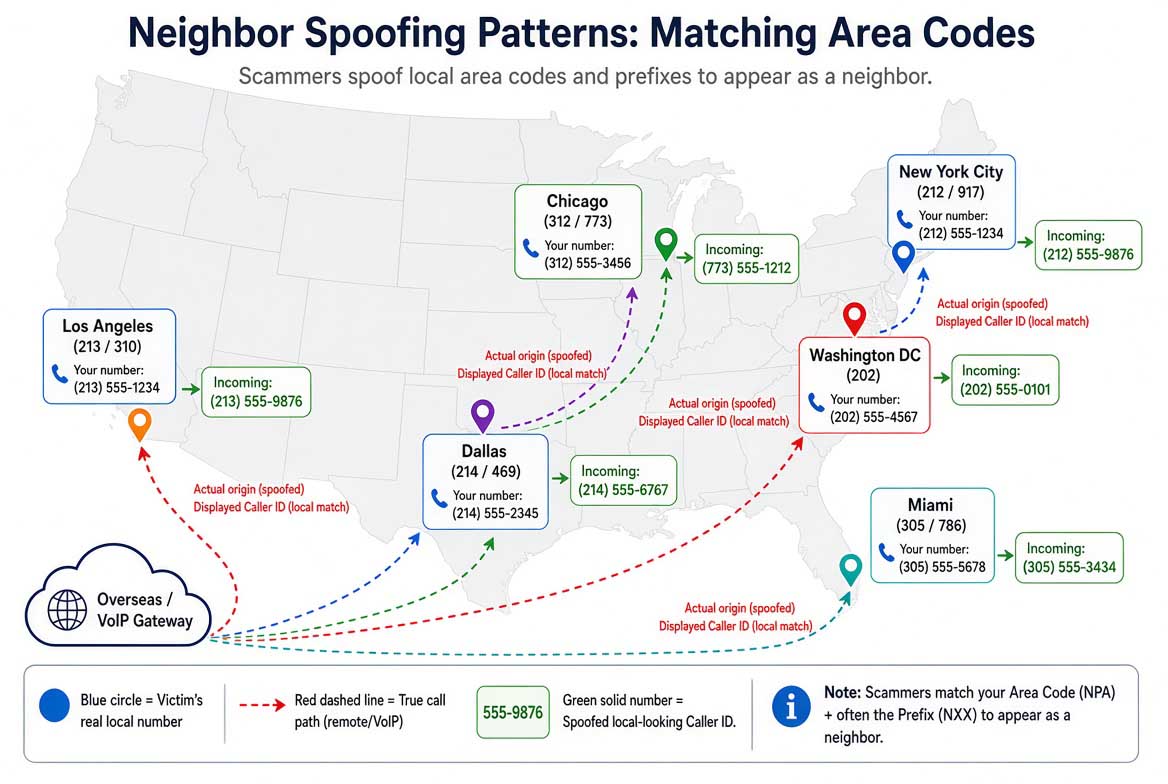
The tactic is simple: the spam caller displays a phone number that matches the victim’s area code and the first three digits of their phone number. For example, if your number is 212-555-1234, the spoofed caller ID might show 212-555-9876.
This works because people are conditioned to answer calls from numbers that look local. Studies have shown that answer rates for calls with matching area codes are significantly higher than calls from out-of-state or unknown area codes.
Spam callers automate this process using databases of phone numbers and algorithms that generate matching prefixes. When a call is placed, the system selects a spoofed number that matches the target’s prefix.
Neighbor spoofing is particularly frustrating because the displayed number often belongs to a real person who has no connection to the spam operation. When victims call back, they reach an innocent person who has no idea their number was used. This leads to confusion, anger, and sometimes harassment of the person whose number was stolen.
7. Common Tools Spoofers Use
Spam callers have access to a variety of tools that make spoofing easy and scalable.
Web-based spoofing services: Websites that allow users to enter a destination number and a spoofed caller ID. These services handle all the technical details behind the scenes. Many operate openly on the internet, despite being used primarily for illegal purposes.
Desktop spoofing software: Applications that integrate with VoIP systems to provide granular control over caller ID settings. These programs often include features like call recording, voice changing, and automated dialing.
PBX hacking tools: Software that exploits vulnerabilities in business phone systems to gain control of SIP trunks and make outbound calls with spoofed caller IDs. This is a growing problem for businesses that do not secure their VoIP systems properly.
SIM boxes: Hardware devices that route calls through multiple SIM cards, making it difficult to trace the origin while also allowing caller ID manipulation. SIM boxes are commonly used for robocall operations.
Auto-dialers with spoofing integration: Robocall systems that combine automatic dialing with caller ID spoofing. These systems can place thousands of calls per minute, each with a different spoofed number.
Also Read: How to Fix a Hacked Facebook Account
8. How to Identify a Spoofed Call
Identifying a spoofed call is not always possible in real time, but there are warning signs.
The number looks too familiar. If the caller ID shows your own number, a neighbor’s number, or a number you recognize but the caller’s voice does not match, be suspicious.
The caller asks for personal information. Legitimate organizations rarely ask for sensitive information over the phone. If a caller requests your Social Security number, bank account details, or passwords, it is almost certainly a scam.
You feel pressured. Spoof callers create urgency. They tell you your account will be closed, you will be arrested, or you will miss out on a limited-time offer. This pressure is designed to bypass your critical thinking.
The call quality is unusual. VoIP calls can sometimes have lower quality than traditional calls. Echoes, delays, or robotic-sounding voices can indicate a VoIP origin, though this is not definitive.
Caller ID shows a name but no number. Some spoofing setups display a business name without a phone number. This is a red flag.
You cannot call the number back. If you try to return the call and get a message that the number is not in service or belongs to someone who has no idea they were spoofed, the call was almost certainly spoofed.
9. Legal and Regulatory Landscape
Different countries have taken different approaches to combating caller ID spoofing.
United States: The Truth in Caller ID Act of 2009 makes it illegal to knowingly transmit misleading caller ID information with intent to defraud, cause harm, or wrongfully obtain anything of value. The FCC enforces this law and has imposed significant fines on spoofers. The STIR/SHAKEN framework, implemented in 2021, requires voice service providers to verify caller ID information for calls originating on their networks.
United Kingdom: Ofcom regulates caller ID presentation and has powers to enforce against spoofing. The UK has also implemented STIR/SHAKEN standards.
Canada: The Canadian Radio-television and Telecommunications Commission (CRTC) has implemented measures to combat spoofing, including requiring service providers to implement STIR/SHAKEN.
Australia: The Australian Communications and Media Authority (ACMA) has introduced mandatory call blocking and tracing requirements for spoofed calls.
European Union: The European Electronic Communications Code requires member states to ensure that caller ID is provided and that spoofing is prevented where technically feasible.
Despite these efforts, enforcement remains challenging. Spoofers operate across borders, use anonymous payment methods, and constantly adapt their techniques. The cat-and-mouse game between regulators and spammers continues.
10. Protection Methods That Actually Work
No single solution will stop all spoofed calls, but combining multiple approaches significantly reduces the risk.
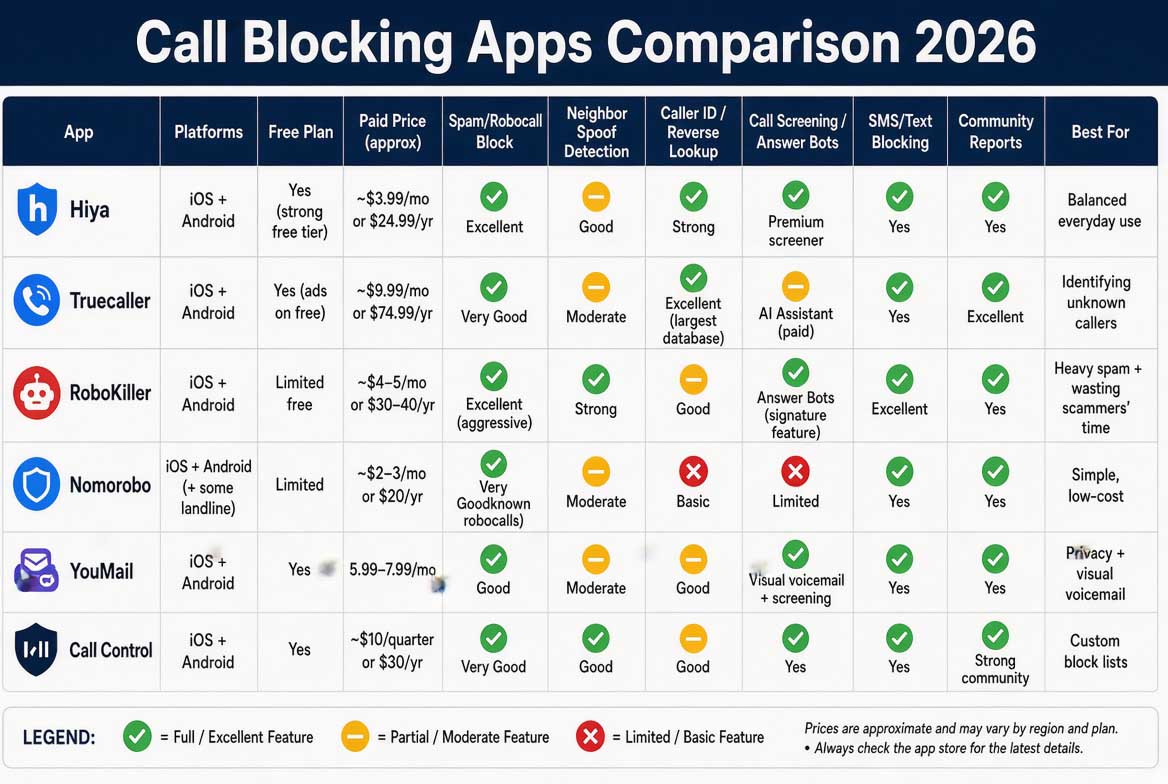
Do not answer unknown numbers. This is the simplest and most effective protection. If you do not recognize the number, let it go to voicemail. Legitimate callers will leave a message.
Use call blocking apps. Apps like RoboKiller, Hiya, Truecaller, and Nomorobo maintain databases of known spam numbers and block calls in real time. They can also detect spoofed patterns.
Enable carrier-level blocking. Major carriers in the US, UK, Canada, and Australia offer free spam blocking tools. AT&T Call Protect, Verizon Call Filter, T-Mobile Scam Shield, and similar services are effective against many spoofed calls.
Register with the Do Not Call list. While this will not stop spoofed calls, it reduces the number of legitimate telemarketing calls you receive, making it easier to identify the suspicious ones.
Use STIR/SHAKEN compatible phones. Newer phones and VoIP systems support attestation levels that indicate whether caller ID has been verified. Calls with no attestation or low attestation are more likely to be spoofed.
Be skeptical of caller ID. Treat caller ID as a suggestion, not a fact. If a call seems suspicious, hang up and call the organization back using a number you know is legitimate.
Do not call back unknown numbers. If you miss a call from an unknown number, do not call it back. If it is important, they will call again or leave a message.
11. Common Mistakes People Make
Even knowledgeable people fall into traps when dealing with spoofed calls.
Trusting caller ID completely. Caller ID is not verified by default. Treating it as proof of identity is the most common mistake.
Engaging with the caller. Once you answer, the spam caller knows your number is active. Even saying “not interested” confirms you are a real person. The best response is no response.
Calling back spoofed numbers. Many victims call spoofed numbers back to confront the scammer. This often reaches an innocent person whose number was stolen and creates confusion.
Assuming technology will protect you. STIR/SHAKEN and call blocking are helpful, but they are not perfect. Spoofers find ways around them.
Sharing personal information without verification. Never give out sensitive information to an incoming caller. If they claim to be from your bank, hang up and call your bank directly.
12. Pro Tips from Telecommunications Experts
Telecommunications security professionals recommend these advanced strategies.
Monitor your own number. Use services that alert you if your phone number is being spoofed. Some carriers offer this as a free feature.
Implement DMARC for voice. The same principles used to authenticate email can be applied to voice calls through STIR/SHAKEN. Ensure your carrier supports it.
Use VoIP honeypots. Security researchers set up fake phone numbers to attract and analyze spoofing traffic. This helps identify patterns and new techniques.
Report spoofed calls. File complaints with the FCC (US), Ofcom (UK), CRTC (Canada), or your local regulator. While individual reports may not lead to action, aggregated data helps enforcement.
Educate vulnerable populations. Elderly individuals and those less familiar with technology are disproportionately targeted. Share information about spoofing with family members and community groups.
Also Read: How Hackers Break Into Bank Accounts
13. Real-World Applications and Case Studies
Case Study 1: The IRS Impersonation Scam
In one of the largest spoofing operations ever documented, scammers placed over 10 million calls using spoofed IRS phone numbers. Victims saw “IRS” and a Washington DC area code on their caller ID. The scammers threatened arrest if victims did not pay fake tax debts. The operation was eventually traced to call centers in India and the US, but not before victims lost hundreds of millions of dollars.
Case Study 2: The Bank Verification Scam
A sophisticated spoofing operation targeted bank customers by displaying the bank’s actual customer service number on caller ID. When victims answered, an automated system asked them to enter their account number and PIN for “verification.” The scammers then used this information to drain accounts. The spoofed number passed all standard checks because it was the real bank number.
Case Study 3: Neighbor Spoofing During Elections
During election seasons, political campaigns and scam operations alike use neighbor spoofing to increase answer rates. In one documented case, a scam operation spoofed numbers that matched the first six digits of targeted voters’ numbers, delivering misleading information about polling locations and times.
14. Frequently Asked Questions
Is it possible to stop all spoofed calls?
No. While STIR/SHAKEN and carrier-level blocking have reduced the volume of spoofed calls, determined spammers continue to find ways around these protections. Complete elimination is unlikely in the near future.
Can I sue someone who spoofed my number?
The Truth in Caller ID Act provides for legal action, but identifying the actual person behind a spoofed call is extremely difficult. Most cases go unresolved.
Why do spammers spoof numbers instead of using their real number?
Using a real number would allow victims, law enforcement, and phone companies to trace the call back to the spammer. Spoofing provides anonymity and makes it harder to shut down operations.
Does *57 trace spoofed calls?
*57 is a call trace service that logs the number of the last incoming call. However, it captures whatever caller ID information was transmitted, including spoofed numbers. It does not reveal the real origin.
Is VoIP the only way to spoof calls?
No. While VoIP is the most common method, SS7 exploitation, PBX hacking, and even analog methods can be used. VoIP is simply the most accessible.
Can spammers spoof text messages?
Yes. SMS spoofing works similarly to voice call spoofing. Spammers can send text messages that appear to come from any number, including banks, government agencies, or contacts in your phone.
How do I report a spoofed call?
In the US, file a complaint with the FCC at fcc.gov/complaints. In the UK, report to Ofcom. In Canada, report to the CRTC. In Australia, report to the ACMA.
15. Conclusion and Actionable Takeaways
Phone number spoofing is not a technical mystery. It is a predictable consequence of a phone system built on trust, combined with the accessibility of VoIP technology and the global reach of SS7 networks. Spam callers exploit these factors in a straightforward, step-by-step process that anyone with modest technical skills can replicate.
Understanding how spoofing works is the first step toward protecting yourself. The second step is changing your behavior. Stop trusting caller ID. Stop answering calls from unknown numbers. Stop engaging with suspicious callers.
The phone system will not fix itself. Regulation helps, but enforcement is slow and spammers adapt quickly. Your best defense is your own skepticism.
For those in the telecommunications industry, the challenge is clear. The industry must move toward authenticated caller ID as the default, not the exception. STIR/SHAKEN is a start, but it is not the end. Every carrier, every VoIP provider, and every network operator has a role to play in closing the vulnerabilities that make spoofing possible.
Until that day comes, the most powerful tool you have is the ability to hang up.
