

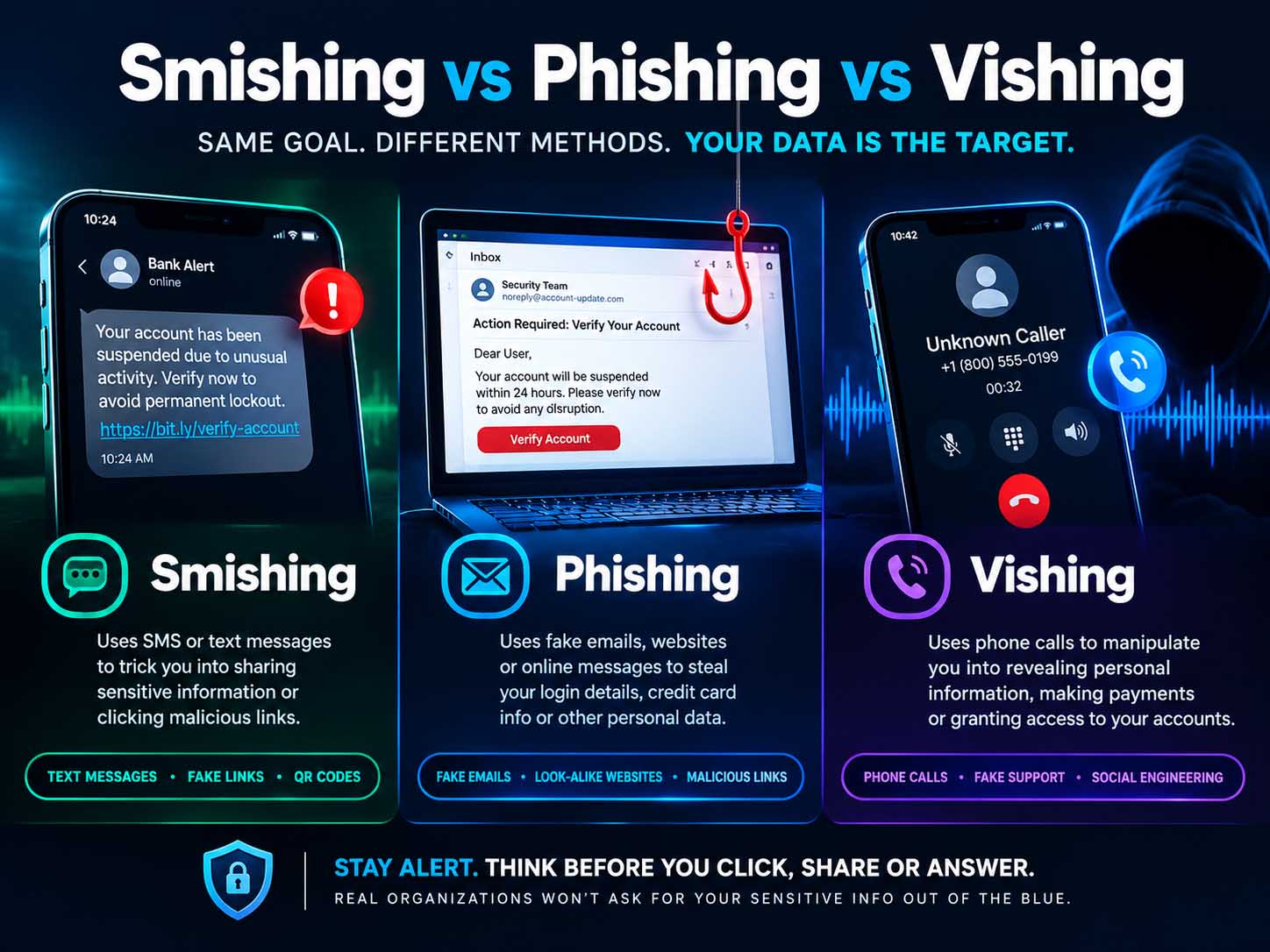
Cybercriminals are constantly evolving their tactics to trick people into handing over sensitive information. Three of the most common and dangerous social engineering attacks you will encounter are smishing, phishing, and vishing. While they share the same goal stealing your personal data, money, or account access they use different channels and techniques.
Understanding the difference between smishing vs phishing vs vishing is your first line of defense. This comprehensive guide breaks down each attack type, provides real world examples, and gives you actionable steps to protect yourself. Whether you are a beginner trying to understand online scams or an expert looking for a refresher, this resource covers everything.
1. What is Phishing? Email Scams Explained
Phishing is the original and most well known form of social engineering attack. It involves cybercriminals sending fraudulent emails that appear to come from legitimate sources such as banks, online services, government agencies, or well known companies. The goal is to trick recipients into clicking malicious links, downloading infected attachments, or providing sensitive information like login credentials, credit card numbers, or Social Security numbers.
Also Read: How Do Spam Callers Spoof Phone Numbers Step by Step?
How Phishing Works
Attackers craft emails that mimic official communications. They use logos, branding, and language that closely resemble the real organization. Common phishing email tactics include:
We've done the vetting. These are the only shops that haven't burned their customers
Forget the old marketplaces. These are the next generation. Faster, safer, better product. This is where the smart money moves. Don't get left behind.
Buyccfullz.com
No waiting, no middlemen. This site moves money. Click and collect..
Dumpseller.com
Clean, verified routes. dumpseller.com keeps the cash flowing. No blocks. No holds.
CvvDump.com
Turn digits into dollars. cvvdump.com is the key to the kingdom. Your wallet stays full.
- Urgent warnings about account suspension or unauthorized access
- Fake invoices or payment requests
- Prize or lottery notifications
- Fake security alerts requiring immediate action
- Requests to verify account information
Common Phishing Examples
A typical phishing email might claim your bank account has been compromised and ask you to click a link to verify your identity. The link leads to a fake login page that captures your credentials.
Another example is an email appearing to be from PayPal saying a large transaction was made and you need to review it. Clicking the link takes you to a convincing replica of the PayPal login page.
2. What is Smishing? SMS Text Message Scams
Smishing is phishing delivered via SMS text messages. The term combines SMS and phishing. Smishing attacks exploit the trust people have in text messages since SMS feels more personal and immediate than email.
How Smishing Works
Attackers send text messages that appear to come from trusted sources like banks, delivery services, government agencies, or even friends and family. The message typically contains a link or a phone number to call. Common smishing tactics include:
- Fake delivery notifications with tracking links
- Bank fraud alerts asking you to verify account activity
- Government benefit notifications
- Prize or gift card offers
- COVID 19 related scams
- Fake security codes or two factor authentication requests
Smishing Attack Examples
A common smishing example is a text that says “Your package could not be delivered. Click here to reschedule.” The link leads to a phishing site that steals your personal information.
Another example is a text claiming to be from your bank: “Suspicious activity detected on your account. Verify now to avoid suspension.” The link leads to a fake banking portal.
3. What is Vishing? Voice Call Scams
Vishing, or voice phishing, uses phone calls to trick victims into revealing sensitive information. Attackers may use spoofed caller IDs to make it appear as if they are calling from a legitimate organization. Vishing can be automated through robocalls or conducted by live scammers.
How Vishing Works
Vishing attacks rely on social engineering over the phone. The scammer creates a sense of urgency or authority to pressure the victim into compliance. Common vishing tactics include:
- Fake IRS or tax authority calls demanding payment
- Bank fraud department calls requesting account verification
- Tech support scams claiming your computer is infected
- Government impersonation calls threatening legal action
- Fake lottery or prize winnings requiring payment to release funds
- Grandparent scams where the caller pretends to be a relative in trouble
Vishing Attack Examples
A classic vishing example is a call from someone claiming to be from the IRS saying you owe back taxes and must pay immediately or face arrest. They demand payment via gift cards or wire transfer.
Another example is a tech support scam where the caller says your computer has a virus and they need remote access to fix it. Once connected, they install malware or steal your data.
4. Smishing vs Phishing vs Vishing: Key Differences
Understanding the differences between these three attack types helps you recognize them more quickly.
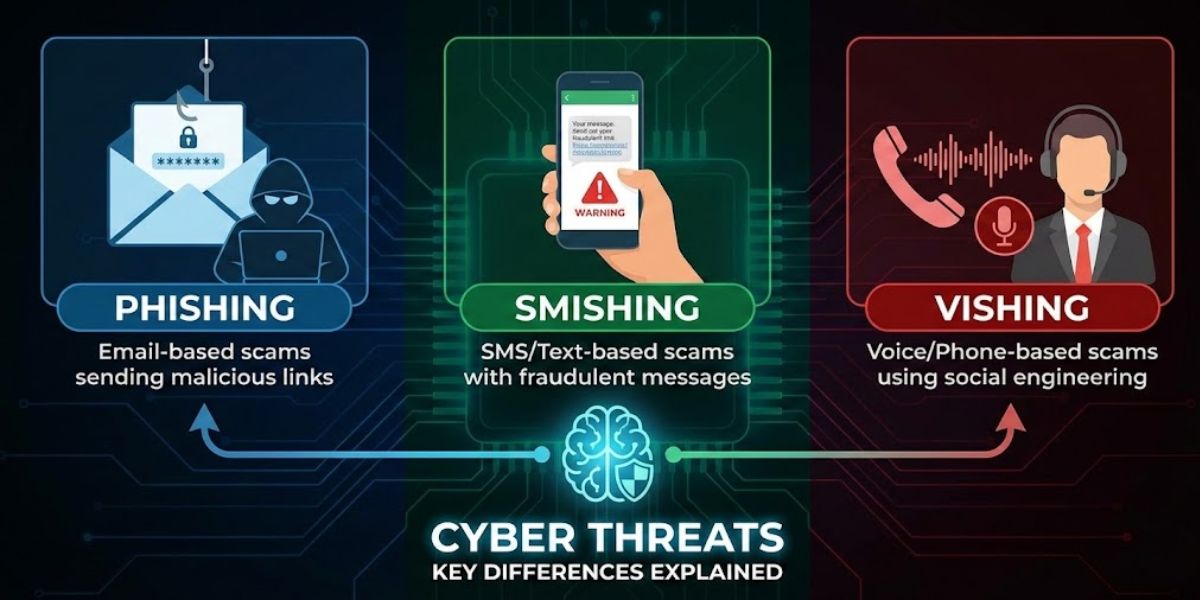
| Attack Type | Channel | Delivery Method | Typical Content |
|---|---|---|---|
| Phishing | Text with links or attachments | Fake invoices, account alerts, security warnings | |
| Smishing | SMS | Text messages with links | Delivery notifications, bank alerts, prize offers |
| Vishing | Phone | Live calls or robocalls | IRS threats, tech support, bank verification |
Key Distinctions
- Phishing uses email and often includes attachments or links to fake websites.
- Smishing uses SMS text messages and relies on the immediacy and trust of text communication.
- Vishing uses phone calls and can involve live scammers who are trained in manipulation.
Each attack type can also be combined. For example, a smishing message might ask you to call a number, which then becomes a vishing attack.
5. Real World Examples of Each Attack Type
Phishing Example
Email Subject: “Urgent: Your Account Will Be Suspended” Sender: “[email protected]” (spoofed) Body: “Dear Customer, we detected unusual activity on your account. Please verify your identity immediately by clicking the link below. Failure to do so will result in account suspension within 24 hours.”
The link leads to a fake Bank of America login page. When you enter your credentials, the attacker captures them.
Smishing Example
Text Message: “FedEx: Your package is waiting for delivery. Please confirm your delivery address here: bit.ly/fedex-delivery”
The link leads to a phishing page that asks for your name, address, and credit card information to “confirm delivery.”
Vishing Example
Phone Call: “Hello, this is John from Microsoft Windows Support. We have detected that your computer is infected with a virus. Please allow me remote access to your computer to remove the threat before your data is compromised.”
The scammer then installs malware or steals personal information.
Also Read: How to Remove Location from Photos Before Sharing
6. Common Red Flags and Warning Signs
Recognizing the warning signs of smishing, phishing, and vishing can save you from becoming a victim.
Phishing Red Flags
- Generic greetings like “Dear Customer” instead of your name
- Spelling and grammar errors
- Suspicious sender email addresses
- Urgent or threatening language
- Unexpected attachments
- Links that don’t match the supposed sender’s website
- Requests for sensitive information via email
Smishing Red Flags
- Messages from unknown numbers
- Unexpected delivery notifications for items you didn’t order
- Shortened URLs or links that look suspicious
- Requests to call a number back
- Messages claiming to be from your bank but using a generic greeting
- Offers that seem too good to be true
Vishing Red Flags
- Caller ID showing a number you don’t recognize
- Caller claiming to be from a government agency demanding immediate payment
- Threats of arrest, deportation, or legal action
- Requests for payment via gift cards, wire transfer, or cryptocurrency
- Caller asking for your Social Security number, bank account details, or passwords
- High pressure tactics designed to keep you from thinking clearly
7. How to Protect Yourself from Smishing, Phishing, and Vishing
General Protection Tips
- Never click links in unsolicited messages. Always type the URL directly into your browser.
- Verify the sender. Contact the organization directly using a known phone number or email address.
- Use multi factor authentication. This adds an extra layer of security even if your password is compromised.
- Keep software updated. Security patches protect against known vulnerabilities.
- Install anti phishing and anti malware tools. Many security suites include protection against these attacks.
- Educate yourself and your team. Awareness is the most effective defense.
- Trust your instincts. If something feels off, it probably is.
Phishing Specific Protection
- Use email filtering tools that detect phishing attempts
- Hover over links before clicking to see the actual URL
- Enable SPF, DKIM, and DMARC for your domain
- Report phishing emails to your IT department or email provider
Smishing Specific Protection
- Do not reply to suspicious texts
- Block unknown senders
- Forward spam texts to 7726 (SPAM) on most carriers
- Use SMS blocking apps
- Never call back numbers provided in suspicious texts
Vishing Specific Protection
- Let unknown calls go to voicemail
- Do not trust caller ID alone scammers can spoof numbers
- Hang up immediately if you feel pressured
- Call back using a known number to verify
- Register your number on the National Do Not Call List
- Use call blocking apps
8. What to Do If You Fall Victim to a Scam
If you realize you have been scammed, act quickly to minimize damage.
- Change your passwords immediately. Start with email and banking accounts.
- Contact your bank or credit card company. Report the fraud and freeze accounts if necessary.
- Run a full malware scan on your devices.
- Report the scam to the FTC, FBI IC3, or your local cybercrime unit.
- Monitor your accounts for suspicious activity over the next several months.
- Place a fraud alert on your credit report with the three major bureaus.
- Consider credit freezing to prevent new accounts from being opened in your name.
9. Expert Insights and Pro Tips
Pro Tip 1: The Golden Rule of Cybersecurity
Never provide sensitive information in response to an unsolicited request. Legitimate organizations will never ask for your password, Social Security number, or bank details via email, text, or phone.
Pro Tip 2: Use Dedicated Devices for Sensitive Transactions
Consider using a separate device or browser profile for banking and financial transactions. This reduces the risk of cross contamination from phishing or smishing attacks.
Pro Tip 3: Verify Before You Trust
If a message creates urgency or fear, pause and verify independently. Call the organization using a number you know is legitimate. Do not use any contact information provided in the suspicious message.
Pro Tip 4: Keep a List of Trusted Contacts
Maintain a list of verified phone numbers and email addresses for your bank, insurance company, and other important services. Use these when you need to contact them, not the numbers in suspicious messages.
Expert Insight: The Psychology Behind Scams
Scammers exploit cognitive biases like authority bias and scarcity bias. They make you feel that if you don’t act immediately, you will lose something valuable. Understanding these psychological triggers helps you resist them.
10. Frequently Asked Questions
What is the difference between smishing and phishing?
Smishing is phishing delivered via SMS text messages, while phishing uses email. Both aim to trick you into clicking malicious links or providing sensitive information.
Can vishing attacks happen through robocalls?
Yes. Many vishing attacks use automated robocalls that play a recorded message asking you to press a key or call back. These are often precursors to a live scammer taking over.
How do I report a smishing attack?
Forward the suspicious text to 7726 (SPAM) on most US carriers. You can also report to the FTC at ReportFraud.ftc.gov.
What should I do if I clicked a phishing link?
Immediately disconnect from the internet, run a full antivirus scan, change your passwords, and contact your bank if you entered financial information.
Are smishing attacks becoming more common?
Yes. Smishing attacks have increased significantly in recent years because people are more likely to trust and respond to text messages than emails.
How can I tell if a phone call is vishing?
If the caller creates urgency, demands payment, or asks for personal information, it is likely a vishing attack. Hang up and call the organization directly using a known number.
Can scammers spoof phone numbers?
Yes. Caller ID spoofing is common in vishing attacks. Never trust caller ID alone.
What is the best defense against these attacks?
Education and awareness are the best defenses. Knowing what to look for and staying skeptical of unsolicited communications will protect you from most attacks.
Also Read: How to Fix a Hacked Facebook Account
11. Conclusion and Final Recommendations
Smishing, phishing, and vishing are constantly evolving threats that target individuals and organizations worldwide. By understanding how each attack works and recognizing the warning signs, you can protect yourself from becoming a victim.
Remember these key takeaways:
- Phishing comes via email, smishing via text, and vishing via phone calls.
- All three rely on social engineering tactics to trick you.
- Never click links or provide information in response to unsolicited messages.
- Verify independently using trusted contact information.
- Stay educated and share what you learn with others.
Knowledge is your best defense against cybercriminals.
For Verified CC Shops and Carding Resources
If you are looking for verified credit card shops with Non VBV BINs and linkable cards, we recommend the following trusted platforms:
- Cvvdump.com Verified CC Shop with Non VBV BINs and linkable cards
- Buyccfullz.com Premium Credit Card Shop for carders and spammers
- Dumpseller.com Reliable CC Shop with instant delivery
These platforms also offer instant transfers for CashApp, PayPal, Venmo, Zelle, bank accounts, and Western Union transfers to get enough money to Buy Bitcoin with Debit Card No OTP.
For the latest updates and exclusive deals, contact @worlddumps059 on Telegram.
Visit Cvvdump.com, Buyccfullz.com, and Dumpseller.com today to order good CC linkable cards from verified credit card shops.
Also Read: How Hackers Break Into Bank Accounts
